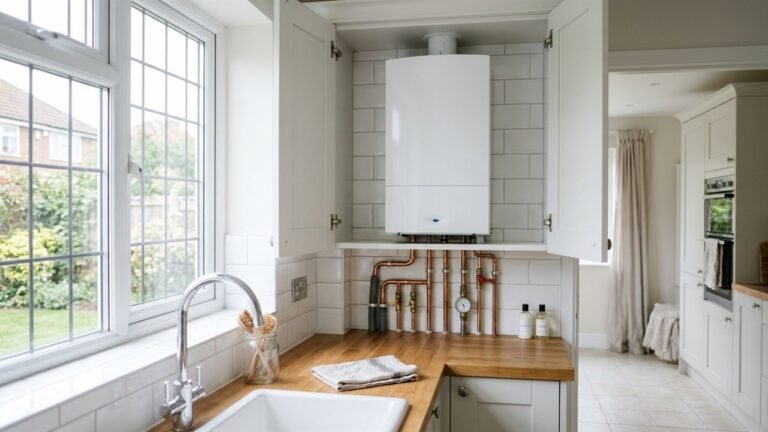

Waking up to cold radiators, lukewarm shower water, and a flashing error message on your combi boiler—such as “System pressure too low, please refill system to 1.0 bar”—is one of the most frequent winter headaches across UK households. Whether you run a Worcester Bosch Greenstar, Vaillant ecoTEC, Ideal Logic, or Baxi combi boiler, low water pressure triggers an immediate safety lockout to protect the heat exchanger from overheating. Fortunately, topping up boiler pressure takes less than three minutes and requires zero plumbing tools. This complete 2026 engineer-verified guide explains exactly what pressure your boiler should be at, how to safely refill any UK filling loop, and how to diagnose hidden causes when your boiler keeps losing pressure with no visible leaks.
Boiler Pressure Quick Reference (UK Combi Systems)
- Normal Cold Pressure (Heating Off): Strictly between 1.0 bar and 1.5 bar (indicated in the green zone on analog dials).
- Normal Hot Pressure (Heating On): Rises naturally to 1.8 bar to 2.2 bar as heated water expands.
- Danger / Lockout Zones: Below 0.5 bar triggers low-pressure boiler shutdown (Worcester EA/224, Vaillant F.22, Ideal F1, Baxi E119). Above 3.0 bar triggers the safety Pressure Relief Valve (PRV) to discharge water outside.
- Zero-Cost Fix: Re-pressurizing a sealed central heating loop using the built-in or braided silver filling loop takes 2 minutes and saves £90–£140 in plumber callout charges.
- Hidden Pressure Drop Cause: If your boiler loses pressure repeatedly with zero wet carpets or dripping radiator pipes, the expansion vessel air cushion has likely deflated, or water is weeping outside through the copper PRV overflow pipe.
1. What Pressure Should a UK Combi Boiler Be At?
Modern sealed central heating systems operate under closed pressurized hydraulics. Unlike older open-vented gravity systems fed by a plastic tank in the loft, combi and system boilers require constant baseline internal water pressure to pump hot water around radiators without boiling inside the heat exchanger or drawing damaging air pockets into the cast iron pump.
| Gauge Reading (Bar) | System Status | What Happens to the Boiler? | Required Action |
|---|---|---|---|
| 0.0 – 0.6 Bar | Critically Low Pressure | Safety lockout triggers. Zero heating or hot water. Fault codes appear. | Top up system immediately via filling loop to 1.2–1.5 bar. |
| 0.7 – 0.9 Bar | Borderline Low | Boiler may run intermittently, but upstairs radiators gurgle or struggle to warm. | Top up gently when cold to 1.2–1.5 bar. |
| 1.0 – 1.5 Bar (Cold) | Optimal Cold Setting | Ideal operating baseline. Quiet circulation and rapid radiator heat-up. | No action needed. |
| 1.8 – 2.3 Bar (Heating On) | Optimal Hot Running | Normal thermal water expansion while central heating runs at 60°C–70°C. | Completely normal; gauge drops back to 1.2–1.5 bar when cool. |
| 2.8 – 3.5+ Bar | Critically High Pressure | PRV safety valve blows open at 3.0 bar, venting hot water outside onto brickwork. | Ensure filling loop taps are shut tight; bleed a radiator slightly to release excess down to 1.5 bar. |
2. How to Fix Low Boiler Pressure: Step-by-Step Top-Up Guide
Before touching any pipe valves, always turn your central heating off and wait 20–30 minutes for the system water to cool down. Topping up a piping-hot boiler gives a false pressure reading and exposes copper joints to cold thermal shock.
Method A: External Braided Silver Filling Loop (Vaillant, Ideal, Baxi, Glow-worm)
Most standard UK combi boilers feature a flexible silver braided metal hose tucked directly underneath the boiler cabinet, connecting the cold mains inlet pipe to the central heating return pipe.
- Locate the Two Valve Levers: Inspect both ends of the flexible braided hose. You will see one or two small black plastic levers (or flathead brass slotted screws). Normally they sit perpendicular (at 90 degrees) to the pipe, indicating they are closed.
- Open the First Valve Fully: Turn the first lever 90 degrees so it sits inline (parallel) with the pipe.
- Slowly Crack Open the Second Valve: Turn the second valve slowly inline. You will immediately hear mains cold water hissing gently through the hose into the boiler.
- Watch the Pressure Gauge Continuously: Keep your eyes locked on the pressure dial or digital LCD readout. As the reading rises smoothly past 1.0 bar and reaches 1.3 to 1.5 bar, immediately snap both valves shut back to their 90-degree crosswise positions.
- Reset the Boiler: Press and hold the boiler’s Reset button for 3–5 seconds (or switch mains power off and on) to clear the fault code.
Method B: Worcester Bosch Greenstar Internal Key Filling Link
Many popular Worcester Bosch Greenstar i, Si, and CDi boilers do not have a visible external braided hose. When your digital display flashes “System pressure too low, please refill system to 1.0 bar”, you need the white plastic T-shaped Worcester filling key stored clipped inside the bottom under-tray:
- Pull off the white plastic under-cover tray beneath the boiler to expose the manifold.
- Locate the vertical plastic manifold port containing a small white square locking nut next to an arrow symbol.
- Align the arrow on the white Worcester filling key and push it firmly upwards into the slot, then turn it 45 degrees clockwise until it locks tightly into place (water should NOT leak out).
- Turn the adjacent white square plastic nut counterclockwise slowly—mains water will rush into the heating loop.
- Watch the dial climb to 1.2–1.5 bar, turn the white square nut back clockwise tightly until water stops flowing, twist the key back 45 degrees, and pull it straight down out of the manifold. (Note: a small teaspoon of water dripping out when pulling the key down is totally normal).
Method C: Built-In Keyless Lever (Worcester 2000/4000 & Ideal Logic+)
Newer boilers feature a simple blue or black pull-down lever directly beneath the chassis. Simply pull and hold the blue tab downward while watching the digital display jump to 1.5 bar, then release it—the spring mechanism closes automatically.
3. Brand-by-Brand Low Pressure Error Codes (UK Boilers)
If your boiler has locked out completely, check the LCD screen against this quick UK manufacturer fault directory:
| Boiler Manufacturer | Low Pressure Error Code | Recommended Refill Target |
|---|---|---|
| Worcester Bosch (Greenstar) | 224 / 2962 / CE 207 / “Refill to 1.0 bar” | 1.2 – 1.5 bar (cold) |
| Vaillant (ecoTEC Pro / Plus) | F.22 (Dry fire / Low water pressure) | 1.2 – 1.5 bar (display flashes bar) |
| Ideal (Logic / Vogue / Independent) | F1 (Low Water Pressure) | 1.0 – 1.5 bar |
| Baxi (Duo-tec / Platinum / 600/800) | E119 / H.02.07 | 1.0 – 1.5 bar |
| Glow-worm (Energy / Betacom) | F22 | 1.2 – 1.5 bar |
4. Boiler Losing Pressure But No Leak? The 4 Hidden Reasons
Topping up your boiler once every 6 months is completely normal maintenance—especially immediately after bleeding trapped air out of your upstairs radiators. However, if you have to refill your boiler every single week or every 48 hours and see zero wet patches on ceilings or carpets, one of these four hidden faults is occurring:

Cause 1: A Deflated Expansion Vessel (Most Common Culprit)
Inside the back of your boiler sits a bright red pressurized metal tank called the expansion vessel, split down the middle by a rubber diaphragm holding compressed air on one side (around 0.8–1.0 bar). Over 3–5 years, that air charge slowly escapes through the Schrader tyre valve.
The Tell-Tale Symptom: When your boiler is cold, pressure sits low at 0.5 bar. As soon as you turn heating on, the needle shoots rapidly past 2.5 bar straight up to 3.0+ bar, forcing the safety valve to dump water outside onto your garden path. When the boiler cools back down at night, pressure plunges back to 0.2 bar and locks out! A Gas Safe engineer simply drains the boiler and re-pumps the vessel air cushion with a cycle pump during an annual boiler service.
Cause 2: Weeping Pressure Relief Valve (PRV) Outside Pipe
Walk outside your kitchen wall directly beneath where your boiler hangs and locate the bent 15mm copper discharge pipe pointing back toward the brick wall. Tie a dry plastic sandwich bag securely over the end of this copper pipe overnight. If water accumulates inside the bag by morning, specks of black central heating sludge have prevented the spring-loaded PRV from closing cleanly, silently draining water pressure outside 24/7.
Cause 3: Evaporating Micro-Leaks on Radiator Valves
A pinhole drip around a brass radiator tail or valve gland nut may only release two drops of water per hour. Because the pipe is running at 65°C, those drops evaporate instantaneously before touching the carpet! Inspect every radiator valve carefully for crusty green verdigris corrosion or pale white limescale stalactites, and gently tighten the hexagonal gland nut clockwise by a quarter-turn.
Cause 4: Bleeding Radiators Without Re-Pressurizing
Every time you bleed trapped cold air out of an upstairs bathroom towel rail or bedroom radiator using a bleed key, you physically release pressurized volume out of the sealed loop. Always follow up a house-wide bleed by topping the boiler dial back up to 1.3 bar, and consider reading our complete radiator balancing guide to stop airlock noises permanently.
5. What Happens If Boiler Pressure Is Too High (Above 2.8 Bar)?
Sometimes, in a rush to clear an error code, homeowners accidentally leave the filling loop tap slightly cracked open or overfill the dial straight up to 3.0 bar. Over-pressurized systems strain internal O-ring seals and trigger the safety discharge valve outside.
How to Lower Excess Boiler Pressure Safely in 60 Seconds: First, verify both filling loop taps are pushed fully shut (perpendicular to the hose). Next, turn the boiler off, take a brass radiator bleed key and a bowl/rag to your nearest radiator, and gently bleed water out of the top bleed nipple into the bowl until someone watching the boiler dial calls out that it has settled cleanly back down to 1.3 bar.
6. Frequently Asked Questions (UK Boiler Pressure)
Q1: Is low boiler pressure dangerous?
No. Low boiler pressure is not a gas leak or explosion hazard. Every UK boiler contains an automatic low-water pressure safety switch that immediately prevents ignition (“dry-firing”) if pressure drops below 0.5–0.7 bar. It is purely a mechanical protection safeguard, not a carbon monoxide danger.
Q2: Why does boiler pressure drop overnight in freezing weather?
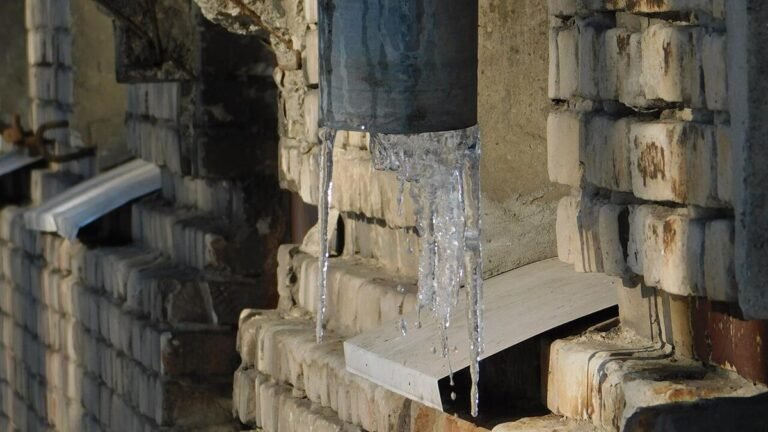
Cold water contracts in volume. If your system sits borderline at 0.9 bar while warm, the drop in overnight ambient pipe temperatures contracts the water just enough to nudge the sensor below 0.7 bar, causing a morning lockout. Furthermore, sub-zero freezes can freeze the external plastic condensate line—learn how to safely thaw it in our frozen boiler condensate pipe guide.
Q3: Can I get government help if my boiler keeps losing pressure due to internal damage?
Yes. Eligible low-income UK homeowners and pensioners can apply for a 0% interest DWP Budgeting Loan or qualify for a 100% free boiler replacement through ECO4 grants. Explore every option in our DWP Emergency Home Grants guide.
Summary: Keep Your Pressure Gauge in the Green Zone
Checking your boiler pressure takes only two seconds whenever you walk into your kitchen or utility cupboard. Keeping your sealed system resting peacefully between 1.0 and 1.5 bar when cold prevents premature circulation pump wear, ensures crisp winter warmth across every room, and safeguards your household against surprise morning cold-shower lockouts.