Condensation vs Penetrating vs Rising Damp: How to Tell the Difference in UK Homes
 By Harry Bennett
•
•
17 min read
Spotting bubbling paint above the skirting board or dark damp blotches creeping up a lounge wall sends almost every British homeowner or renter straight to Google in dread of “rising damp.” Yet here is the reassuring truth: condensation causes more than 70% of damp cases in UK homes, penetrating damp accounts for most of the remainder, and genuine rising damp is surprisingly rare—and physically impossible above the ground floor of a multi-storey block of flats.
Telling condensation, penetrating damp, and rising damp apart matters enormously for your bank balance. Misdiagnosing a bridged patio or a cracked rainwater hopper as rising damp routinely leads UK homeowners into paying £3,000 to £6,000 for unnecessary chemical damp-proof course (DPC) injections that fail to cure the real leak—while tenants wrongly blamed for “condensation lifestyle” end up scrubbing walls that are actually soaked by failing exterior pointing or a leaky upstairs waste pipe.
Quick Answer & Key Takeaways
- Condensation: Appears on cold surfaces anywhere in the home (especially upstairs corners, window reveals, and behind wardrobes), peaks in winter, and almost always grows speckled black mould.
- Penetrating damp: Moves horizontally through exterior masonry from defective gutters, cracked render, missing pointing, or roof leaks. Creates isolated damp patches at any height that darken noticeably after heavy wind-driven rain.
- Rising damp: Groundwater wicking vertically up porous ground-floor brickwork where a DPC is absent or bridged. Strictly restricted to the ground floor below 1.2 metres, leaving yellow-brown tide marks, fluffy white mineral salts (efflorescence), and rotting skirting boards—rarely lush black mould.
- 5-minute DIY foil test: Tape kitchen foil flat over the damp patch for 48 hours. Water droplets on the room-facing side confirm condensation; dampness trapped behind the foil against the plaster proves moisture is coming from inside or outside the wall.
- Avoid “free damp surveys”: Free inspections are frequently sales pitches for chemical DPC injections using misleading two-prong meters. For a genuine diagnosis before spending thousands, hire an independent, non-contracting RICS or PCA-qualified damp surveyor (£250–£550).
Condensation vs Penetrating Damp vs Rising Damp: Side-by-Side UK Diagnostic Matrix
Before buying anti-mould paint, renting a dehumidifier, or calling a builder, match every symptom on your wall against this side-by-side British housing reference table—including hidden plumbing leaks, the fourth culprit that frequently mimics penetrating damp in London flats.
| Diagnostic Feature | Condensation | Penetrating Damp | Rising Damp | Internal Plumbing Leak |
|---|---|---|---|---|
| Where it appears | Any floor; cold external corners, window reveals, behind wardrobes, ceilings | Any floor or height; isolated patches on external walls or upper ceilings | Ground floor or basement ONLY; rises from skirting up to max 1–1.2m | Near bathrooms, kitchens, radiator pipes, or directly beneath upstairs flat |
| Visual signs | Water droplets on glass, fuzzy black mould speckles, damp-feeling paint | Spreading dark wet patch, blistering emulsion, crumbling gypsum, moss outside | Horizontal wavy brown tide mark, white fluffy salt crystals, rotting skirting | Well-defined brown/yellow ring stain, swelling plasterboard, dripping ceiling |
| Black mould present? | Yes — very common | Sometimes (if chronically damp), often patchy | Rare (groundwater nitrate/chloride salts inhibit mould growth) | Often develops after 1–2 weeks of persistent hidden wetness |
| Seasonal pattern | Worst Oct–Mar (cold weather); vanishes in warm dry summers | Worsens sharply within hours/days of heavy rain or driving wind | Present year-round; slightly less obvious in hot dry droughts | Constant year-round regardless of British weather |
| Typical UK fix cost | £0–£600 (ventilation, extractor fan, dehumidifier, insulation) | £150–£1,500 (gutters, pointing, flashing, render repair) | £300–£1,200 (lower bridged ground) or £1,500–£4,500 (DPC + lime plaster) | £90–£500+ (plumber trace & repair; often building insurance claim) |
| UK Renter vs Landlord | Shared (landlord must fix broken fans, vents, heating, or cold bridges) | 100% Landlord / Freeholder structural repair duty | 100% Landlord / Freeholder structural repair duty | 100% Landlord / Freeholder (unless caused by tenant appliance) |
How to Recognise Each Damp Type in a Real British Home
1. Condensation (Warm Indoor Vapour Meeting Cold Surfaces)
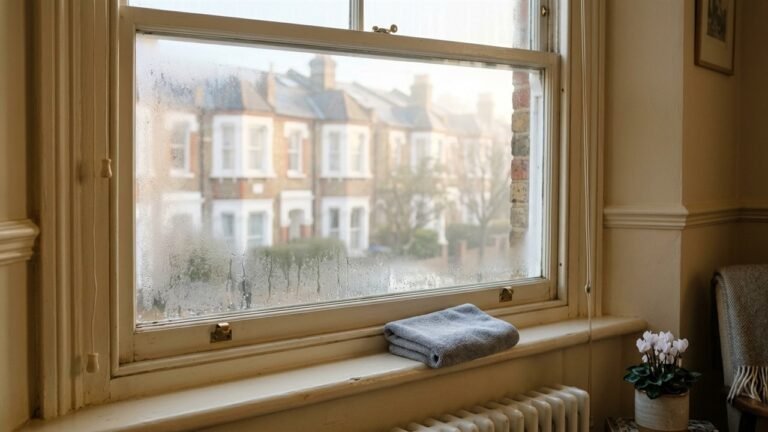
Condensation occurs when moisture generated inside your flat—from showers, cooking, drying laundry on airers, and breathing overnight—hits any surface cooler than the room’s dew point. Because pure condensed water contains no dissolved ground salts, it creates the perfect freshwater habitat for black mould spores. Look for clusters of dark spotting behind beds, around uPVC window reveals, and along upper ceiling junctions in unheated spare rooms. If you have confirmed condensation and black spotting has taken hold, follow our safe cleanup routine for removing black mould on bedroom walls in the UK.
2. Penetrating Damp (Rainwater Entering Horizontally From Outside)
Penetrating damp is liquid rainwater soaking laterally through external brickwork, stone, or render. Unlike condensation, it usually appears as a single localised patch that feels genuinely clammy or cold-wet to the touch and swells outwards after a wet Atlantic storm. Classic UK culprits include overflowing or cracked gutters pouring water straight down the facade, eroded lime mortar pointing on south-west weather-facing walls, failed lead flashing around chimney stacks or bay-window roofs, hairline cracks in painted sand-and-cement render, and blocked cavity wall trays.
3. Genuine Rising Damp (Capillary Action Through Ground-Floor Masonry)
True rising damp happens when groundwater in the soil travels upward through microscopic pores in brick and mortar—just like tea wicking up a sugar cube. Every UK home built since the Public Health Act 1875 was legally required to include a physical Damp-Proof Course (DPC)—traditionally two layers of slate, engineering brick, or bitumen felt, and plastic membrane in post-1960s homes—to halt that upward creep.
Physical slate and bitumen DPCs almost never “wear out.” Nine times out of ten when ground-floor brickwork shows classic low-level damp, the DPC has been bridged rather than failed—for example, a previous owner laid concrete paving slabs, block paving, garden soil, or exterior cement render right over the DPC line, giving rainwater a highway straight past the barrier. Genuine rising damp cannot climb higher than roughly 1 to 1.2 metres against gravity and leaves unmistakable white crusty salt deposits (chlorides and nitrates carried up from the soil) alongside soft, decaying timber skirting boards.
4. Hygroscopic Chimney Salts (The Great Rising Damp Imposter)
In Victorian and Edwardian terraces, dark damp blotches appearing halfway up an internal chimney breast—often on an upstairs bedroom wall where rising damp is physically impossible—are almost always hygroscopic flue salts. Decades of historic coal burning deposited sulphates and nitrates inside the flue brickwork. When an unused fireplace is bricked up without proper ventilation or a roof cowl, those salts pull moisture right out of normal indoor air whenever humidity rises, keeping the plaster permanently damp and staining emulsion yellow-brown.
7-Step DIY Damp Diagnosis Protocol (Before You Spend a Penny)
Before booking a tradesperson or arguing with a letting agent, work through these seven simple diagnostic tests over one weekend—all of them cost under £15 in total and give you concrete evidence.
- Run the 48-hour kitchen foil test: Wipe the damp wall dry with a tea towel, cut a 30cm × 30cm square of ordinary aluminium foil, and seal all four edges tightly to the wall with masking tape so zero room air can slip behind it. Wait 48 hours. If water beads appear on the room-facing front of the foil, indoor condensation is settling on a cold wall. If the front stays dry yet the plaster behind the foil turns darker and wet, moisture is travelling outward from inside the wall (penetrating damp, rising damp, or a hidden leak).
- Check your floor level immediately: Living in a first-floor, second-floor, or tenth-floor flat? Rule out rising damp on the spot—groundwater cannot defy gravity through a dry ground-floor flat to soak your second-floor skirting board. Look instead for condensation, exterior penetrating damp, or an internal leak from the flat above.
- Measure the exterior ground clearance (the 150mm rule): Walk outside to the exact spot behind a damp ground-floor wall. Locate your physical damp-proof course (look for a thin dark slate/bitumen horizontal line in the mortar bed roughly two bricks above ground, or look at your perforated sub-floor air bricks). Outdoor paving, tarmac, soil, or flowerbeds MUST sit at least 150mm (two brick courses) below that DPC line. If patio slabs sit flush with or above internal floor height, rain splashback is bridging your DPC.
- Inspect the exterior wall during heavy rain: Put on a coat during a downpour and watch the guttering, cast-iron downpipes, swan-neck bends, and lead roof flashings above the damp patch. A single leaking gutter joint pouring a steady ribbon of water onto brickwork saturates a nine-inch solid wall within a single wet weekend.
- Trace the damp outline lightly in pencil and date it: Draw a faint pencil tick at the edge of the patch today and check again after three dry days and after the next storm. Patches that expand sharply after rainfall point straight to penetrating damp; patches that swell steadily every single day even during a dry spell point to a live plumbing leak.
- Check your combi boiler pressure & water meter: If a damp patch sits near radiators, kitchen units, or a ground-floor concrete screed, watch your combi boiler pressure gauge for 48 hours—steady drops below 1 bar indicate a concealed central heating pinhole leak. Turn off all taps and washing machines for two hours and read your water meter to rule out a leaking mains supply pipe.
- Measure indoor humidity & wall surface temperature: Place a £10 digital hygrometer in the affected room. Persistent readings above 65% RH alongside streaming morning windows strongly point toward condensation—or reveal that condensation is compounding an existing cold-wall defect.
UK Damp Survey & Repair Costs: Avoiding the £4,000 Chemical Injection Trap
One of the biggest financial traps in British homeownership is calling a “free damp survey” company listed on the first page of search results. Because those firms make their profit selling chemical silicone DPC injections and waterproof cement tanking plaster, their salespeople regularly press an electrical two-prong resistance meter into a Victorian wall, trigger a loud red beep (caused by harmless old salts, carbon ash in historic lime mortar, or surface condensation), and hand over a £4,500 quote on the spot.
Paying £250–£550 upfront for an independent, non-contracting damp surveyor (accredited by RICS or the Property Care Association, who sells zero building work) frequently saves thousands by identifying a £180 broken downpipe or £450 bridged patio instead. Compare realistic 2026 UK costs below:
| Service / Remediation Work | Typical UK Cost (2026 £ GBP) | When It Is Actually Needed | Watch-Out / Consumer Tip |
|---|---|---|---|
| Independent PCA / RICS Damp Survey (non-contracting) | £250–£550 | Before buying an older property or before committing to >£1,000 damp works | Insist on salt analysis / carbide meter testing, thermal imaging & full external inspection. |
| Gutter clearance, downpipe repair & repointing | £150–£900 | Penetrating damp from overflowing hoppers, cracked mortar, or slipped tiles | Fixes the vast majority of sudden wall patches—let wall dry 1 month per inch of brick thickness. |
| Lowering bridged external paving / French gravel drain | £300–£1,200 | Patio, driveway, or flowerbed built above DPC line on ground-floor walls | Cures “fake rising damp” permanently without drilling a single chemical hole. |
| Breathable lime plaster strip & re-skim (per wall) | £600–£1,800 | Victorian solid walls ruined by trapped modern gypsum or cement tanking | Allows pre-1920 solid brick to evaporate moisture safely instead of pushing damp upward. |
| Chemical DPC injection + specialist replastering | £1,500–£4,500+ | Rare cases of verified, unbridged ground-floor DPC failure after lab salt testing | Never accept on first-floor walls, or without lowering external ground levels first! |
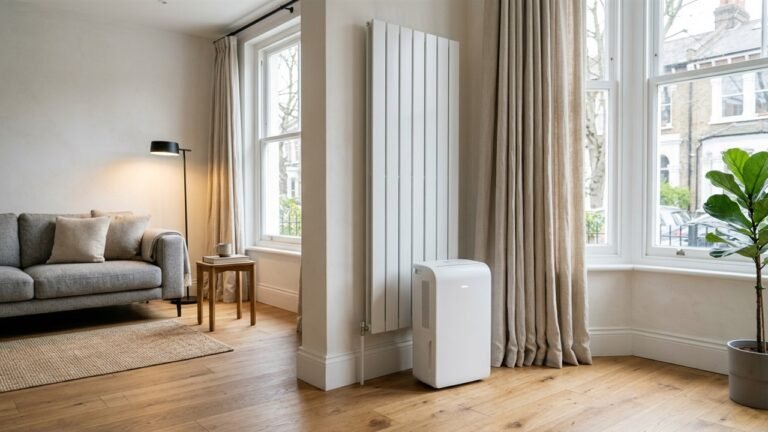
| Condensation upgrade (dMEV fan + 12L dehumidifier) | £250–£700 | Confirmed high-humidity condensation with cold walls & winter black mould | Check exact electricity spend in our UK dehumidifier running cost guide. |
How Damp Patterns Differ Across UK Property Types
Victorian & Edwardian Solid-Wall Terraces (Pre-1920)
Built with nine-inch solid brick and soft breathable lime mortar, Victorian terraces were designed to absorb light rainfall and evaporate it straight back outside. Problems explode when modern owners smother the outside in waterproof masonry paint or hard cement render—or slap impervious modern gypsum skim plaster directly onto internal brick—trapping moisture inside the wall until it bursts out above the skirting board looking exactly like rising damp. Always check exterior concrete garden paths, blocked sub-floor Victorian air bricks, and capped chimney breasts before assuming DPC failure.
1930s Semi-Detached & Post-War Cavity-Wall Houses
Cavity walls were invented to stop rainwater ever reaching the inner leaf of brick. When penetrating damp shows up inside a 1930s or 1950s cavity-wall home, look for cavity bridging: mortar snots dropped onto metal wall ties during construction, wet rubble piling up at the bottom of the cavity above the DPC, or poorly installed blown-fibre cavity wall insulation that has become waterlogged on exposed rain-lashed gable walls.
1960s–1980s Post-War Council Flats & Concrete Blocks
In purpose-built ex-local authority blocks, genuine rising damp is virtually unheard of above ground level. Instead, flats suffer a twin combination of severe thermal-bridge condensation (around uninsulated concrete balconies, deck-access walkways, and window lintels) and structural penetrating damp from failed flat-roof asphalt membranes, leaking communal soil stacks, or cracked precast concrete panel expansion joints.
Modern Post-2010 New-Build Flats & Townhouses
Modern buildings include robust plastic DPCs, full cavity trays, and high-grade insulation—so true rising damp is essentially non-existent. Damp patches in a post-2010 flat almost always stem from either push-fit concealed plumbing leaks behind boxed-in bathroom risers, failed silicone seals around shower trays soaking adjoining bedroom plasterboard, or high-humidity condensation caused by switched-off MVHR units and sealed trickle vents.
Pro Tip: Spot a Bridged Damp-Proof Course Outside in 60 Seconds
Step outside your ground-floor front bay or kitchen extension and count the bricks between the paving slabs and the perforated clay or plastic sub-floor air bricks. If patio stones sit level with the air bricks—or if rainwater puddles against the brickwork during a downpour—you do not need chemical wall injections. Digging a simple 150mm-wide gravel French drainage channel along the base of the wall to drop external ground height two courses below the DPC frequently dries out stubborn skirting-board damp over a single summer.
Buying a UK Home? What to Do If Your Survey Flags “Possible Rising Damp”
Almost every RICS Level 2 HomeBuyer Report on a pre-1930 British terrace includes a standard red or amber warning along the lines of “elevated moisture readings detected at lower wall level—specialist damp and timber survey recommended.” Do not panic or pull out of a sound purchase on that sentence alone.
General valuation surveyors carry two-pin electrical meters and rarely have time to pull back furniture, dig beside paving slabs, or test wall salts. If your mortgage lender requests a specialist report—or you want clarity before exchanging contracts—commission an independent, non-contracting PCA or RICS damp specialist rather than inviting a free-quote chemical injection firm. An unbiased written report diagnosing a £400 bridged front path or £250 repointing job satisfies mortgage underwriters far more credibly, prevents unnecessary chemical drilling into historic brickwork, and gives you solid evidence to negotiate a fair price reduction with the seller.
5 Common UK Damp Misdiagnosis Mistakes That Waste Thousands
- Believing a two-prong electrical moisture meter on plaster: Standard pin meters were calibrated for timber—not masonry! They measure electrical conductivity, not actual liquid water. Harmless hygroscopic salts, carbon ash in Victorian mortar, metal corner beading, and foil-backed plasterboard all make pin meters scream “100% WET” on completely dry walls.
- Painting waterproof “damp-seal” paint over wet walls: Slapping bituminous damp-seal paint or tanking slurry onto a damp patch without curing the external leak traps liquid water inside the brickwork—forcing it sideways and upward until paint blisters off a metre higher up the wall six months later.
- Buying a £250 dehumidifier to fight a leaking gutter: A dehumidifier removes airborne indoor humidity brilliantly, yet it will run flat-out costing £20+/month while an overflowing exterior downpipe continues pouring hundreds of litres of rainwater into your brickwork every storm.
- Treating a historic Victorian house like a modern sealed box: Repointing soft 1890s London stock bricks with rock-hard modern Portland cement mortar traps rainwater inside the bricks themselves, causing brick faces to crumble (spall) during winter frosts and driving penetrating damp straight indoors. Always specify breathable NHL 3.5 lime mortar on pre-1920 brickwork.
- Skipping routine exterior maintenance until plaster stains appear: By the time brown damp shows on your indoor paint, external brickwork has often been soaking for months. Walking the perimeter every autumn catches slipped tiles and blocked hoppers before water ever breaches inside.
5 Clues You Are Actually Dealing With a Neighbour’s Leak in a UK Flat
In London leasehold conversions and purpose-built mansion blocks, mystery damp on upper-floor walls or ceilings is often neither condensation nor exterior rainwater—it is a slow leak from the flat directly above. Watch for five tell-tale signs:
- Brown tea-ring staining on ceilings or upper partition walls: Clean condensation leaves grey-black spotting; water filtering through wooden joists, plasterboard, and dust leaves distinctive yellow-brown rings.
- Damp appears directly beneath an upstairs bathroom, kitchen, or radiator: Floor layouts in converted Victorian terraces and council blocks usually stack wet rooms vertically.
- Wetness spikes at predictable daily times (e.g., 7:30am or 9pm): Intermittent bursts tied to morning showers or washing machine spin cycles almost always point to a failed shower tray silicone seal or loose bath waste trap upstairs.
- Bubbling emulsion paint on an internal dividing wall: Condensation overwhelmingly targets cold exterior walls, whereas damp on a warm internal wall between rooms strongly signals a concealed pipe or upstairs leak.
- Patch stays active during dry weather: Unlike penetrating rain damp, an upstairs plumbing weep refuses to dry out even during a sunny two-week dry spell. Notify your upstairs neighbour and building managing agent in writing immediately.
Seasonal UK Damp Prevention & Inspection Calendar
- October–November (Autumn Storm Check): Clear fallen leaves from gutters, roof valleys, and gullies; check window perimeter mastic and chimney flashing; clear debris away from ground-level air bricks. Pair this with our full UK winter home maintenance checklist.
- December–February (Winter Indoor Monitoring): Track room relative humidity with a digital hygrometer (aim for 45%–55% RH), check behind external-wall wardrobes once a month, and inspect external walls after heavy named storms for fresh damp streaks.
- April–June (Spring Masonry & Drying Window): Schedule any external lime repointing, render patching, gutter replacements, or lowering of bridged patio paving during warmer dry months so saturated brickwork dries thoroughly before next winter’s frosts arrive.
UK Tenant, Landlord & Consumer Protection Note
Who pays for damp repairs in a UK rented home? Penetrating damp (leaking roofs, broken gutters, cracked walls, defective window frames), rising damp (bridged or failed DPCs), and concealed plumbing leaks are 100% the landlord’s legal repair responsibility under Section 11 of the Landlord and Tenant Act 1985 and the Homes (Fitness for Human Habitation) Act 2018. Even where condensation is involved, under Awaab’s Law (active in social housing and extended toward private rentals via the Renters’ Rights Act), landlords must investigate severe damp and mould hazards within strict legal timescales rather than automatically dismissing reports as “tenant lifestyle.”
Always run the foil test, photograph exterior gutter leaks or ground-level tide marks with dates, and submit findings in writing. If your landlord refuses to investigate structural damp, escalate to your local council’s Environmental Health team (HHSRS inspection) and review our full guide on landlord vs tenant repairs for damp in the UK. Safety note: Never switch on electrical sockets or wall switches located directly inside a visibly wet, dripping penetrating-damp patch—isolate the circuit at the consumer unit and have an electrician inspect it.
Frequently Asked Questions
Can you get rising damp in an upstairs flat or first-floor bedroom?
No—genuine rising damp is physically limited to ground-floor and basement walls directly in contact with the earth, rising to a maximum height of roughly 1 to 1.2 metres before gravity and evaporation stop capillary action. Damp above skirting level on a first floor or higher is always condensation, penetrating damp from outside, hygroscopic chimney salts, or an internal plumbing leak.
How accurate is the kitchen foil test for telling condensation from rising damp?
When all four edges are taped tightly flush against a smooth painted wall for 48 hours, the foil test is remarkably reliable as a first-stage check. Droplets forming solely on the room-facing outer surface prove indoor air is condensing on a cold wall; moisture pooling behind the foil against the plaster proves water is migrating through the wall fabric—though note that severe cases can occasionally show both sides wet if a penetrating leak also chills the wall below dew point.
Does rising damp cause black mould on UK walls?
Usually not directly on the salty tide-mark zone itself. Groundwater carries dissolved mineral nitrates and chlorides up into the plaster, which create white fluffy crystalline efflorescence and generally inhibit lush black mould growth. Heavy fuzzy black mould spreading across bedrooms and behind furniture is far more strongly linked to freshwater indoor condensation.
How long does a damp wall take to dry out once the leak is fixed?
The classic UK building surveyor rule of thumb is roughly one month of drying time per inch (25mm) of solid wall thickness. A saturated nine-inch Victorian solid brick wall can easily take 6 to 9 months to dry completely back to equilibrium after a leaking downpipe or bridged patio is fixed—so resist repainting with impermeable emulsion too early.
Are chemical damp-proof course (DPC) injections ever actually worth buying?
Only in the minority of ground-floor properties where an independent, non-contracting surveyor has ruled out bridged exterior paving, blocked air bricks, leaking drains, and defective lime plaster—and confirmed active groundwater capillary rise via carbide moisture and salt analysis. Even then, the salt-contaminated plaster must be replaced with breathable lime or salt-retardant render for the wall to stay dry.
Why do my ground-floor damp patches disappear in summer and return every autumn?
If damp patches dry out completely every June and reappear in November without any white salt tide marks, condensation is almost certainly the primary cause—driven by colder walls, closed windows, and indoor laundry drying. Penetrating damp also eases during dry summer months yet flares rapidly after a single heavy July thunderstorm.
Should I buy a cheap £25 moisture meter from Amazon to test my walls?
Be cautious. Two-pin electrical resistance meters work well for checking whether timber floorboards or skirting boards are above 20% moisture (rot risk), yet they routinely give false high readings on brick and plaster due to harmless historic salts or foil-backed plasterboard. A £10 digital room hygrometer plus a £25 non-contact infrared surface thermometer tells you far more about real UK damp causes.
Does UK buildings insurance cover rising damp, penetrating damp, or condensation?
Standard UK buildings insurance policies almost never cover rising damp, condensation, or gradual penetrating damp caused by worn-out pointing or neglected gutters, as insurers class these as maintenance or wear and tear. However, sudden water damage caused by a named winter storm ripping off roof tiles—or an internal escape of water from a burst pipe, overflowing tank, or upstairs flat leak—is typically covered under standard buildings policies (less your policy excess).
About Harry Bennett
Harry is the editorial lead at London Homecare, researching practical home maintenance, damp prevention, laundry care, and energy-saving solutions tailored to UK flats, terraced houses, and British weather conditions.