How to Stop Window Condensation Overnight in UK Homes (2026 Winter Guide)
 By Harry Bennett
•
•
15 min read
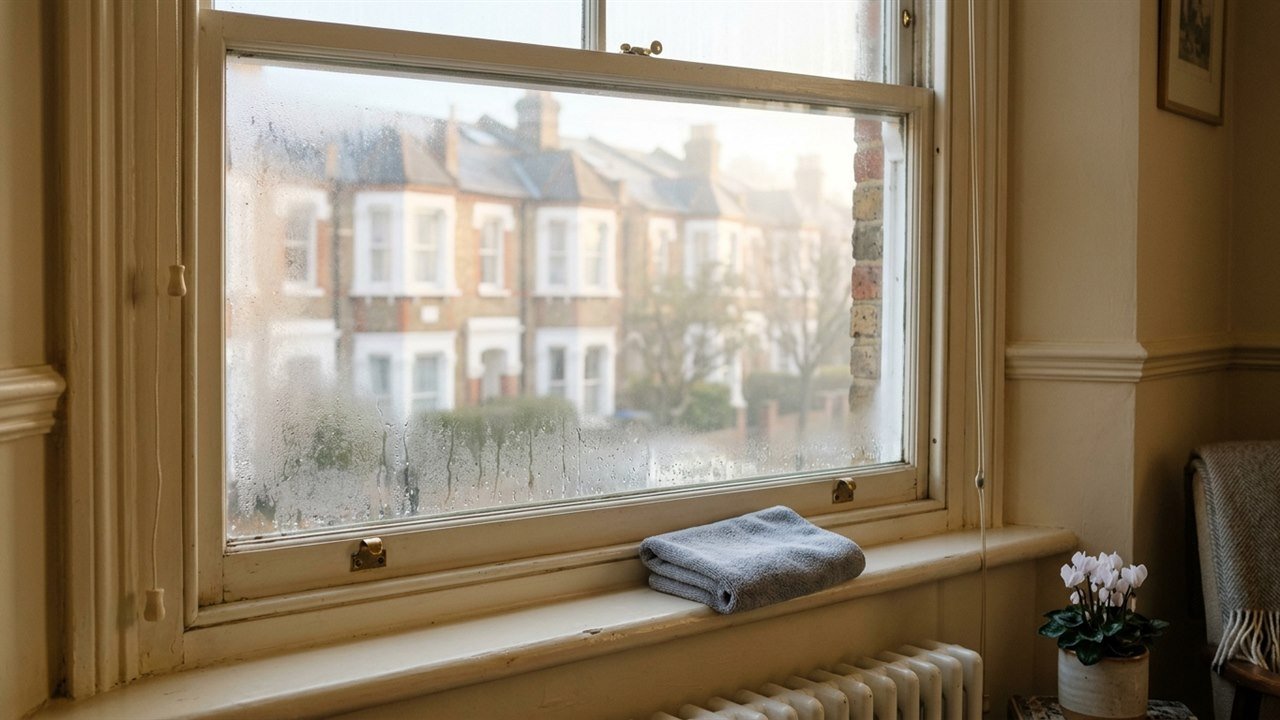
Pulling back the bedroom curtains on a crisp November morning only to find icy puddles pooling along the uPVC window sill is a classic British winter headache. To stop window condensation overnight in UK homes, you have to tackle two things at the same time: lower the bedroom’s relative humidity below 55% before you go to sleep, and keep the inside pane of glass warmer than the room’s dew point.
Two adults sleeping in a standard UK double bedroom breathe out and perspire roughly 400 to 600 millilitres of water vapour every single night. In a tightly sealed modern flat or a retrofitted Victorian terrace with double glazing, that warm, moist air has nowhere to escape. The moment it hits a cold pane of glass—especially behind heavy blackout curtains that block warmth from your radiator—it turns straight back into liquid water, soaking timber sills, rotting plaster reveals, and feeding black mould along the rubber gaskets.
Quick Answer & Key Takeaways
- Why windows stream overnight: Warm indoor air holds moisture from breathing, showers, and evening cooking; when bedroom glass drops below the dew point (typically 10°C–12°C at 60% humidity), water condenses directly onto the pane.
- Fastest free fix tonight: Keep window trickle vents open, pull curtains back from above the radiator so warm air can sweep the glass, and do a 5-minute morning “shock ventilate” (Stoßlüften) right after wiping the panes dry.
- Target bedroom humidity: Aim for 45% to 55% relative humidity (RH) using a £8–£12 digital hygrometer. Above 60% RH, overnight window condensation becomes almost guaranteed when outside temperatures dip below 6°C.
- Skip the viral hacks: Smearing washing-up liquid on glass or leaving bowls of table salt on the sill will not remove half a litre of overnight moisture. Invest in a window vacuum (£35–£60) or an energy-efficient compressor dehumidifier instead.
- Check between the panes: Water trapped inside a double-glazed unit means the perimeter seal has failed—no amount of ventilation will clear it, and the sealed glass unit will need replacing.
Why UK Windows Get So Wet Overnight (The Dew Point Explained)
Window condensation is not a plumbing leak—it is pure physics. Warm air holds far more water vapour than cold air: at 20°C, a cubic metre of air holds 17.3 grams of moisture, whereas at 8°C it holds just 8.3 grams.
When a UK bedroom heated to 19°C sits at 65% relative humidity, its dew point is 12.3°C. Once the combi boiler switches off at 10:30pm and thick curtains trap a cold pocket against single-glazed sash windows or older double glazing, the glass drops below 12°C. Meanwhile, sleepers keep exhaling warm vapour all night until droplets stream down the pane.
Single Glazing vs Double Glazing vs Blown Units
Wipe your fingertip across the wet glass first to identify which problem you have:
- Inside pane: Indoor humidity meeting cold glass—common on single-glazed timber sash windows and pre-2002 double glazing lacking low-emissivity coatings.
- Between the panes: Your finger stays dry because the sealed unit’s perimeter gasket has failed. Ventilation cannot clear it; a local glazier can replace just the glass unit for £90–£180 per pane.
- Outside pane: Droplets on the exterior of A-rated double or triple glazing on frosty mornings are a good sign—heat is staying inside rather than warming the outer pane.
UK Window Condensation Solutions Compared: Cost, Effectiveness & Effort
Every November, social media fills up with miracle tricks claiming to banish wet windows for pennies. Some genuinely transform a damp bedroom within 48 hours; others barely absorb a teaspoon of water. The table below compares the most common UK fixes based on typical 2026 retail prices and Ofgem’s October–December 2026 electricity price cap benchmark of 26.32p per kWh.
| Method | Upfront Cost (£) | Running Cost (Winter) | Moisture Removed / Impact | Verdict for UK Homes |
|---|---|---|---|---|
| Opening trickle vents + 5-min morning purge | £0 | Minimal (~2p–5p extra heating/day) | Flushes damp air fast without chilling walls | Essential baseline habit |
| Microfibre cloth + squeegee every morning | £5–£10 | £0 (plus washing cloths) | Removes 100% of surface water before it evaporates back into room | Good budget routine |
| Cordless window vacuum (e.g. Kärcher WV2) | £38–£65 | Negligible (<1p/week to charge) | Clears whole house in 3 mins without wet rags drying indoors | Best daily time-saver |
| 12L–20L compressor dehumidifier | £120–£240 | ~4.5p–7p/hour (~30p–50p/day) | Extracts 1.5–4 litres/day; drops RH from 70% to 50% | Most effective overall fix |
| Secondary glazing shrink film (DIY kit) | £12–£25 per pack | £0 | Raises inner glass surface temp by 3°C–5°C on single glazing | Top renter fix for sash windows |
| Disposable calcium chloride moisture traps | £2–£5 each | £10–£25/month in refills | Absorbs ~200ml over 2–4 weeks (far too slow for a bedroom) | Only useful inside wardrobes |
| Salt bowls / cat litter in socks / washing-up liquid | £1–£4 | £0 | Near-zero reduction in room humidity; soap smears glass | Myths — skip them |
Your 7-Step Overnight Routine to Stop Window Condensation
You do not need to freeze with your windows flung wide open all night to wake up to dry glass. Consistent daily habits that control moisture before bedtime do 80% of the heavy lifting. Follow this step-by-step sequence over the next seven days and monitor the drop on a cheap digital hygrometer.
- Stop drying laundry in bedrooms or on radiators: A single 6kg washing machine load holds roughly 2 to 2.5 litres of water even after a 1,400rpm spin. Draping wet jeans across a bedroom radiator pumps that entire volume straight into the air right beside your coldest window. Keep laundry strictly in one closed room with a dehumidifier or follow our complete guide to drying clothes indoors without causing damp.
- Run bathroom and kitchen extractors for 20 minutes after use: Hot showers and boiling pasta are the biggest hidden drivers of overnight bedroom condensation—warm humid air drifts up the stairwell and settles in cooler upstairs bedrooms. Always shut the bathroom door while showering, keep pan lids on the hob, and leave the extractor fan running until mirrors are completely clear.
- Leave window trickle vents open (even when it is freezing): That slim plastic bar at the top of your uPVC or timber frame is engineered to provide slow, background air exchange without creating an icy gale. Closing every vent seals stale vapour inside. If you are worried about heating bills, check our full breakdown on whether you should keep trickle vents open in winter.
- Never tuck long curtains over the radiator—and crack them slightly at the sill: In most UK bedrooms, the radiator sits directly beneath the window for a deliberate reason: rising warm air sweeps up the glass to keep it above the dew point. Floor-length blackout curtains draped over a radiator trap heat behind the fabric while sealing an ice-cold air pocket right against the pane. Shorten curtains so they sit just above the radiator, or tuck the hem behind the radiator top while leaving a 2cm gap between the glass and blinds so warm air can circulate.
- Keep bedroom background warmth steady (minimum 15°C–16°C overnight): Letting an unheated bedroom plunge to 11°C overnight causes relative humidity to spike dramatically, even if no extra moisture enters the room. Setting thermostatic radiator valves (TRVs) to level 2 or keeping a gentle overnight thermostat setback of 15°C–16°C prevents glass temperatures from crashing.
- Crack the bedroom door ajar by a few centimetres if safe to do so: Unless you have a fire door that must remain closed (common in HMOs and high-rise flats), leaving the bedroom door slightly ajar allows the moisture exhaled by two sleepers to dilute across the landing rather than concentrating inside a 10m² box.
- Wipe wet glass immediately each morning and do a 5-minute purge: If droplets still appear on frosty mornings, suck them off immediately with a cordless window vacuum or dry microfibre cloth (never leave the wet cloth to dry on the radiator, or the water goes straight back into the air!). Then throw windows on opposite sides of the flat wide open for 5 to 10 minutes. Rapid cross-ventilation swaps humid indoor air for crisp, drier outdoor air without cooling your brick walls or furniture.
Do Viral Condensation Hacks Actually Work?
1. Washing-Up Liquid & Shaving Foam on Glass
Buffing Fairy Liquid or shaving foam onto dry glass lowers surface tension so droplets flatten into an invisible film. Crucially, the water is still there—running invisibly into timber beads and uPVC rubber gaskets while leaving streaky smears in winter sun. Fine for a bathroom mirror, useless for lowering bedroom humidity.
2. Bowls of Table Salt or Cat Litter in a Sock
Table salt and silica cat litter absorb barely a teaspoon of moisture over a week once humidity rises above 75%—no match for two adults exhaling 500ml every night. Even commercial £3 calcium chloride tubs take three weeks to gather 250ml, making them handy inside wardrobes but overwhelmed in a bedroom.
When to Buy a Dehumidifier (and How to Run It Cheaply)
If your home is a ground-floor Victorian conversion, a poorly ventilated 1960s council flat, or a family home where four people shower and dry laundry indoors every week, ventilation alone often hits a limit during wet, mild British spells when outside air is 11°C and 95% humid. That is where an electric dehumidifier pays for itself in a single winter.
For heated living spaces and bedrooms kept above 15°C, choose a 12-litre or 20-litre compressor dehumidifier with a built-in digital humidistat (brands such as Meaco, Pro Breeze, and EcoAir are widely tested in the UK). Set the target humidity to 50% or 55% RH and place it on the landing or in the hallway outside the bedrooms with doors open—or run it inside the wettest bedroom for two hours before bedtime so you do not have to listen to the fan overnight.
A modern 12L low-energy compressor unit draws roughly 160W to 220W, costing around 4p to 6p per hour under late-2026 electricity rates. For exact wattage tables comparing 12L, 20L, and desiccant units across hourly, daily, and monthly winter usage, see our UK dehumidifier running cost breakdown.
Renter-Friendly Upgrade for Single-Glazed Sash Windows
Living in a rented Victorian flat with draughty single-glazed sash windows where you cannot install double glazing? Spend £15 on a clear secondary glazing shrink-film kit (such as Stormguard or 3M). You apply double-sided tape around the painted timber frame—never the glass—press the clear film in place, and tighten it with a hairdryer until drum-tight and virtually invisible. The trapped pocket of still air insulates the room from the freezing glass, cutting overnight window condensation by up to 70% without altering the window or risking your tenancy deposit.
How Condensation Behaves Across Different UK Property Types
Not every British home condenses for the same reason. A solution that cures a 2019 Barratt new-build overnight often barely dents morning puddles in a north-facing Georgian or Victorian flat. Tailoring your tactics to your property’s construction saves weeks of trial and error.
Victorian & Edwardian Solid-Wall Terraces (Pre-1920)
Original timber sash windows with single 4mm float glass have virtually zero thermal resistance—on a 2°C January night, the inner glass surface plunges to roughly 4°C–6°C. Because solid nine-inch brick walls also lack a cavity, window reveals feel icy to the touch. If you live in a conservation area or rented flat where double glazing is out of reach, secondary glazing shrink film, fitted magnetic Perspex panels (£45–£90 per window), or heavy thermally lined Roman blinds mounted outside the recess (with a slight ventilation margin) deliver the biggest overnight improvement.
1930s Semi-Detached Homes & Bay Windows
Curved or angled 1930s bay windows are notorious condensation traps because the bay protrudes outside the main wall footprint, exposing three sides of glazing and an uninsulated timber-and-tile bay roof to freezing wind. Worse, most homeowners install a curved radiator underneath and then hang full-length bay curtains straight across the front, trapping a frigid microclimate inside the alcove. Shortening bay curtains to sill height—or fitting bespoke wooden shutters with tilted louvres—lets warm air rise directly across all three bay panes.
Post-War Council Flats & 1960s–1980s Blocks
Ex-local authority concrete and brick blocks often suffer from severe cold bridging around exposed concrete window lintels and solid balcony slabs, compounded by older aluminium-framed double glazing with conductive metal spacer bars. Because single-aspect flats lack windows on opposite walls for cross-breeze ventilation, mechanical extraction is non-negotiable: upgrade sluggish bathroom fans to continuous-running humidistat models (dMEV) and run a 12L–20L compressor dehumidifier whenever drying washing indoors.
Modern Airtight New-Builds (Post-2010)
Modern flats and estates built under strict airtightness rules hold heat brilliantly—which means they also trap every drop of indoor moisture if trickle vents are snapped shut or Mechanical Ventilation with Heat Recovery (MVHR) filters are clogged with dust. In a post-2010 home, morning window condensation is almost never a glazing fault; vacuuming MVHR intake filters every three months and leaving trickle vents open normally clears panes completely within 72 hours.
UK Indoor Dew Point & Condensation Risk Chart
Use this quick reference table alongside your digital hygrometer to see the exact glass surface temperature at which water begins forming in your bedroom:
| Bedroom Temp (°C) | Relative Humidity (%) | Exact Dew Point (°C) | Overnight Risk on UK Glazing (Outside Temp 2°C) |
|---|---|---|---|
| 18°C | 45% RH | 5.9°C | Low: Modern & older double glazing stays dry; light mist on single sash panes. |
| 18°C | 55% RH | 8.8°C | Moderate: A-rated double glazing stays dry; older 1990s units mist at bottom edges. |
| 18°C | 65% RH | 11.3°C | High: Heavy condensation across older double glazing and cold aluminium frames. |
| 18°C | 75% RH | 13.5°C | Severe: Even modern double glazing puddles; black mould risk on plaster reveals. |
| 20°C | 50% RH | 9.3°C | Low–Moderate: Ideal UK winter comfort zone for most double-glazed bedrooms. |
| 20°C | 65% RH | 13.2°C | High: Streaming panes overnight once heating switches off after bedtime. |
| 15°C (unheated) | 70% RH | 9.6°C | High: Cool spare bedrooms trap damp air rapidly; mould starts behind furniture. |
Common Mistakes That Make UK Window Condensation Worse
- Drying soggy window cloths on bedroom radiators: Wiping half a cup of water off the glass and then draping the soaking microfibre rag onto the radiator beneath simply boils that same water straight back into the bedroom air by lunchtime. Wring cloths directly into the sink and dry them on a heated bathroom rail with the extractor running.
- Shutting spare-room radiators completely off: Leaving a box room or spare bedroom unheated with the door shut turns it into an icebox. Warm humid air still sneaks under the door gap from the landing and immediately condenses onto the freezing glass and external wall. Keep unused rooms on TRV frost/setting 1–2 (minimum 14°C–15°C).
- Taping over trickle vents or wall air bricks: Blocking background vents stops an obvious draught, yet forces indoor humidity above 70% within 48 hours—turning minor window mist into peeling paint and black mould across plaster reveals.
- Pushing bedside drawers and houseplants hard against the sill: Large clusters of watered indoor plants sitting directly on a cold window sill transpire continuous moisture right onto the glass while blocking rising radiator warmth.
- Repainting damp timber sills in January: Glossing over wet wood traps residual moisture beneath the paint film, causing blistering and wet rot by spring. Wait for a warm, dry weekend in May or June after checking moisture levels are below 15%.
Seasonal UK Window & Humidity Maintenance Calendar
- October (Pre-Winter Prep): Vacuum dust out of trickle vent slots, clean exterior uPVC drainage weep holes with a cotton bud and warm water, check rubber gasket seals for gaps using the “paper slip test” (if a sheet of A4 slides easily through a closed window, adjust hinge cams or replace gaskets), and test bathroom extractor fans with a square of toilet tissue.
- November to February (Peak Winter Routine): Clear morning glass moisture within 30 minutes of waking, perform daily 5-minute cross-ventilation purges, wash dehumidifier mesh filters every two weeks so airflow stays strong, and wipe rubber glazing seals weekly with mild detergent.
- March to April (Spring Inspection): Remove any temporary secondary shrink film once night temperatures stay reliably above 8°C, inspect external window mastic sealant for hairline cracks caused by winter frosts, and touch up flaking exterior timber putty before summer showers arrive.
Preventing Black Mould Around Window Seals and Reveals
Left standing on rubber uPVC gaskets, silicone beads, and painted plaster reveals morning after morning, window condensation quickly turns into black spotting. Spores germinate wherever surface relative humidity stays above 70% for more than a few consecutive hours.
Once a week during winter, wipe down the window frame, rubber seals, and sill with warm water and a drop of mild detergent, then dry thoroughly with a clean tea towel. If faint black spots have already appeared along the wall beside the frame, never dry-brush them—that releases clouds of spores into the bedroom. Treat affected plaster and frames properly using our step-by-step guide to removing black mould on bedroom walls safely.
Also inspect the exterior of your window if condensation is accompanied by damp patches on the plaster around the frame. Cracked exterior mastic sealant, blocked uPVC drainage slots (the tiny weep holes at the bottom outer edge of the frame), or a missing drip groove beneath a stone sill can allow wind-driven winter rain to seep indoors and mimic heavy condensation.
UK Tenant, Landlord & Safety Note
When condensation becomes a landlord repair issue: While everyday ventilation and wiping down light morning condensation fall under tenant upkeep, persistent severe condensation caused by broken extractor fans, painted-shut windows, missing heating controls, perished window seals, or failed double-glazed units is a landlord responsibility under Section 11 of the Landlord and Tenant Act 1985 and the Homes (Fitness for Human Habitation) Act 2018.
Under Awaab’s Law (live in social housing and extended toward the private rented sector via the Renters’ Rights Act), landlords must investigate serious damp and mould hazards within strict legal timescales rather than blaming tenant “lifestyle” out of hand. Always photograph morning condensation, log indoor hygrometer readings, and report faulty fans or rotten window frames in writing. Safety note: Never block permanent air bricks or gas-appliance ventilation grilles to stop draughts—combi boilers, open-flued fires, and gas hobs require unobstructed ventilation to prevent dangerous carbon monoxide build-up.
Frequently Asked Questions
Should I leave my bedroom window slightly open all night in winter?
Usually, no. Leaving a casement window cracked on the night latch all night chills the surrounding plaster reveal while wasting central heating gas. Keep trickle vents open overnight and do a brisk 5-minute full-window purge each morning and evening instead.
What humidity level stops window condensation in the UK?
Keep bedrooms between 45% and 55% relative humidity at 18°C–20°C. On frosty UK nights below 2°C outside, older double glazing or single-glazed sash windows may still mist slightly at 50% RH, so aiming closer to 45% before bed helps noticeably.
Does keeping curtains open or closed overnight reduce condensation?
Heavy floor-length curtains save heat escaping through glass, but they trap cold air right against the pane and block warmth from the radiator below. Use sill-length curtains finishing above the radiator and leave a slight breathing gap at the sides so warm room air reaches the glass.
Why do my brand-new double-glazed windows still have condensation inside?
Modern uPVC or aluminium double glazing is far more airtight than old timber frames, eliminating accidental draughts that used to carry vapour outdoors. Ensure your trickle vents are slid fully open and verify that bathroom and kitchen extractors actually vent outside rather than into a blocked duct.
Is it better to run a dehumidifier overnight or during the day?
Running a dehumidifier for 2 to 3 hours in the evening (after cooking, showers, and laundry) usually drops bedroom humidity enough to prevent heavy overnight condensation without disturbing sleep. In very damp flats, run a quiet night-mode unit (under 40dB) on the landing outside your slightly ajar door.
Why does my bay window get far worse condensation than flat windows?
Bay windows project outwards into cold winter air on three exposed sides and frequently sit under poorly insulated bay roofs. Because long curtains drawn across the bay mouth cut the alcove off from the rest of the heated room, air inside the bay plunges several degrees colder than the bedroom. Fitting sill-length curtains or leaving them parted slightly above the bay radiator dramatically reduces overnight puddles.
What can I do if open trickle vents whistle loudly during winter gales?
In exposed high-rise flats or coastal streets, storm winds can make basic trickle vents howl. Partially closing the vent on the windward side during an active gale while keeping sheltered leeward vents open is completely fine—just reopen it once winds drop. For a permanent fix on noisy urban roads, upgrade standard vents to acoustic or storm-baffled trickle vents (£25–£60 fitted) that cut road noise and wind whistle while maintaining airflow.
About Harry Bennett
Harry is the editorial lead at London Homecare, researching practical home maintenance, damp prevention, laundry care, and energy-saving solutions tailored to UK flats, terraced houses, and British weather conditions.