Is It Cheaper to Leave Heating on Low All Day in the UK? What the Energy Data Shows
 By Harry Bennett
•
•
14 min read
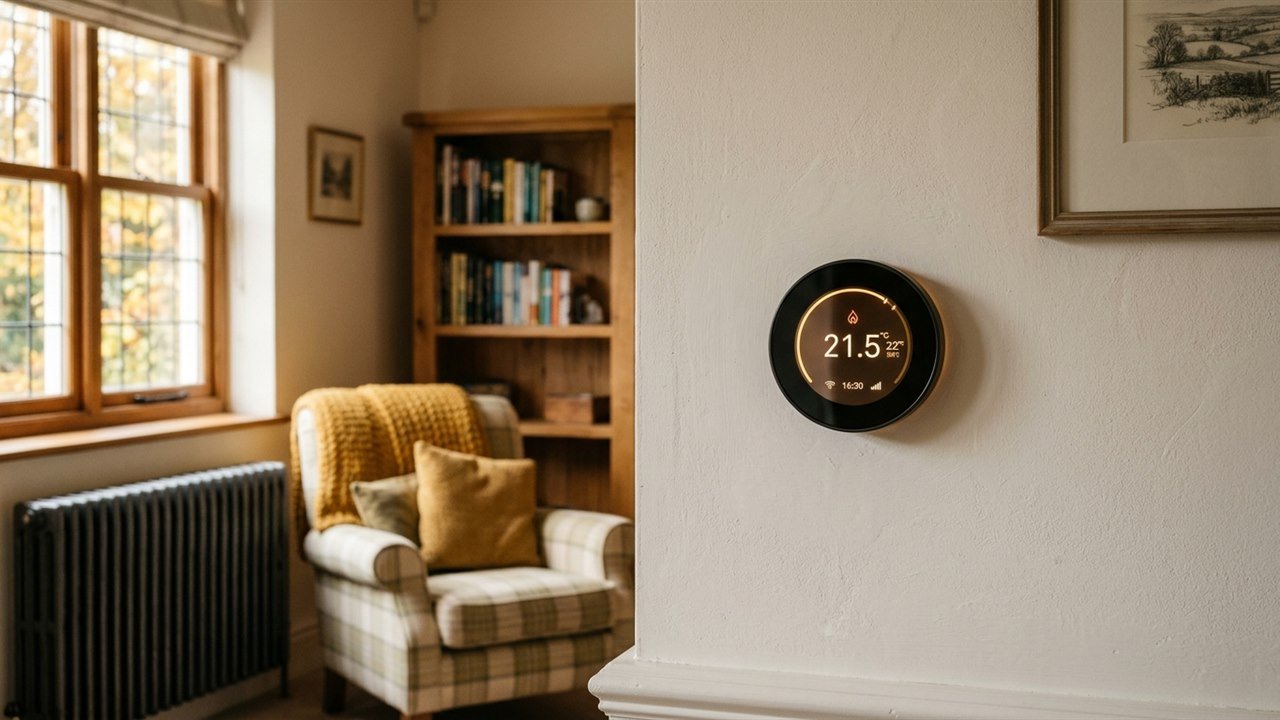
No — for the vast majority of UK homes heated by a gas combi or system boiler, leaving the central heating on low all day uses more gas and costs more money than switching it on only when you need it. Every winter, this stubborn British household myth resurfaces on group chats and social media, convincing millions of households to keep radiators ticking over while nobody is home.
Building-physics data from the Energy Saving Trust, UK university heating trials, and smart-meter studies all point to the same conclusion: a house loses heat continuously whenever the inside is warmer than the street outside, so keeping it warm for empty rooms guarantees higher bills. There are, however, four specific UK housing exceptions — including air-source heat pumps, solid-wall damp flats, and underfloor heating — where a steady low-and-slow approach genuinely makes sense. Here is what the energy data actually shows and the smartest schedule for your property.
Quick Answer & Key Takeaways
- Gas boilers (radiators): Heating only when you are home and awake typically saves 10% to 20% (roughly £100 to £220 a winter in an average three-bedroom house) compared with leaving the thermostat on low all day.
- Why the myth fails: Heat escapes faster the bigger the gap between indoor and outdoor temperatures. Re-warming a cool house for 45 minutes in the evening burns less gas than fighting nine hours of steady heat loss through walls and windows.
- The damp-flat compromise: In older Victorian terraces or council flats prone to condensation, use a setback temperature of 15°C when out rather than turning heating completely off — enough to curb black mould without paying for constant warmth.
- When “low and slow” IS cheaper: Air-source heat pumps and wet underfloor heating embedded in thick concrete screed run most efficiently on continuous low temperatures with only a modest 2°C–3°C night setback.
- Best overall tactic: Combine timed heating schedules with a 60°C combi flow temperature and room-by-room thermostatic radiator valves (TRVs).
Why Leaving Heating on Low All Day Costs More: The Physics Explained
The argument for leaving heating on low all day sounds intuitive at first glance: people assume that reheating a cold house from 13°C to 20°C at 5:30 pm forces the boiler to work overtime, burning a huge spike of gas that wipes out anything saved during the day. It feels like comparing steady motorway driving to stop-start London traffic.
Unfortunately, houses do not behave like cars — they behave like leaky buckets. Imagine trying to keep a bucket with holes in the bottom topped up to a certain line. The higher the water level inside the bucket, the greater the pressure pushing water out of the holes, and the faster it drains.
In thermal physics, this is Newton’s Law of Cooling. The rate at which your home loses heat through brickwork, single or double glazing, loft joists, and air gaps is directly proportional to the temperature difference between indoors and outdoors:
- Leaving heating on low at 17°C all day (when it is 4°C outside): Your home maintains a 13°C temperature gap for nine straight daytime hours. Heat pours steadily out through the fabric of the building the entire time you are at work or on the school run, and your boiler keeps cycling back on to replace every kilowatt-hour lost.
- Letting the house drop to 13°C while out (when it is 4°C outside): Within a couple of hours, the temperature gap shrinks to 9°C, cutting the hourly rate of heat loss by almost a third. Over nine hours, far less total energy escapes through your walls and roof.
When you get home at 5:30 pm and fire the boiler back up, it does burn a concentrated burst of gas for 35 to 50 minutes to bring the air and furniture back to 20°C. Crucially, however, the energy required to reheat the house can never exceed the heat that escaped while it cooled down — and because less heat escaped overall while the house was cooler, the total kilowatt-hours burned across the 24-hour cycle are always lower with timed heating.
What the UK Energy Data Shows: Cost Comparison by Heating Schedule
To put real British pounds on the difference, the table below models a typical UK three-bedroom semi-detached house (EPC Band D, moderately insulated loft and double glazing, gas combi boiler) across a standard 180-day winter heating season from mid-October to mid-April. Costs are calculated using a representative Ofgem price cap gas unit rate of 6.2p per kWh (space heating only, excluding hot water and standing charges).
| Heating Schedule | Typical Thermostat Pattern | Est. Winter Heating Gas (kWh) | Est. Winter Cost (at 6.2p/kWh) | Difference vs Timed Schedule |
|---|---|---|---|---|
| Constant comfort (24/7) | 19.5°C day and night | 14,800 kWh | £918 | +£236 more (+35%) |
| “Low all day” + warm evenings | 16.5°C daytime & night, 20°C evening | 12,650 kWh | £784 | +£102 more (+15%) |
| Timed twice-daily (recommended) | 20°C (6:30–8:30am & 5:00–10:30pm), 14°C setback | 11,000 kWh | £682 | Baseline (£0) |
| Timed + 60°C flow temp + TRV zoning | 20°C occupied rooms only, 15°C unused rooms | 9,350 kWh | £580 | -£102 saved (-15%) |
Notice an important detail in how UK housing stock behaves: the worse your insulation, the bigger the penalty for leaving the heating on low all day. In a leaky uninsulated Victorian terrace in South London or a draughty 1930s semi with uninsulated cavity walls, keeping radiators running all day can add £180 to £260 to a single winter’s gas bill compared with timed bursts. Conversely, in a brand-new EPC Band A or B flat with thick insulation and airtight windows, the house cools down so slowly while you are out that the gap between both strategies narrows considerably — though timed heating still edges ahead on a gas boiler.
The One Boiler Efficiency Catch (And How to Beat It)
There is a small grain of truth buried inside the “low all day” argument that heating engineers point out: modern condensing gas boilers run most efficiently when modulating gently at lower flow temperatures rather than blasting flat-out at 80°C for short bursts. If a boiler runs at full 80°C output during a frantic evening warm-up, it drops out of condensing mode and loses roughly 8% to 10% efficiency during that warm-up window.
Does that efficiency dip make “low all day” cheaper? No — the extra daytime heat loss through your walls outweighs the boiler efficiency dip by a wide margin. Better still, you can capture the best of both worlds by keeping your timed heating schedule and setting your combi boiler’s central heating dial to 60°C. Our step-by-step guide to lowering your combi boiler flow temperature to 60°C shows how to keep the boiler in high-efficiency condensing mode even during morning and evening warm-ups.
4 UK Situations Where “Low and Slow” Actually Makes Sense
Blanket advice rarely fits every British home. While gas-radiator households almost always save with timed schedules, there are four legitimate scenarios where steady low-level heating either saves money or protects the fabric of your home.
1. Air-Source and Ground-Source Heat Pumps
Heat pumps rewrite the gas-boiler rulebook. Because a heat pump’s Coefficient of Performance (COP) drops sharply when forced to produce high flow temperatures to rapidly reheat a cold house, UK heat pump installers design systems to run continuously at low flow temperatures (often 35°C to 42°C) controlled by weather compensation. Switching a heat pump off all day and demanding a 6°C recovery surge at 5 pm can easily increase electricity consumption. Stick to steady temperatures with only a modest 2°C to 3°C setback overnight or when out.
2. Wet Underfloor Heating in Thick Concrete Screed
If your ground floor has wet underfloor heating buried inside 65mm to 75mm of concrete screed, it holds enormous thermal mass. It can take three to four hours to feel noticeably warm from cold and hours to cool down again. Switching it completely off for eight hours is impractical and inefficient; instead, run a gentle 2°C to 4°C setback (for example, 16°C overnight and 19.5°C when occupied).
3. Condensation-Prone Solid-Wall Flats and Victorian Terraces
Some older London flats, basement conversions, and end-of-terrace houses have cold external solid brick walls that plunge below the indoor dew point if heating is turned completely off for twelve hours. Warm, moist indoor air from cooking, showering, and breathing hits those freezing walls and turns straight into running water and mould spores. In these properties, you should not heat to 19°C all day — instead, set a minimum setback of 15°C rather than switching the boiler completely off. Pairing sensible background warmth with practical steps to stop window condensation in winter and tackle black mould on cold bedroom walls protects both your deposit and your lungs without wrecking your gas budget.
4. Working From Home in One Room All Day
If you work remotely from a spare bedroom or dining table from 9 am to 5 pm, you obviously cannot sit in a 13°C house. However, running the entire house at 20°C all day for one person can add £300+ over a winter. Instead, turn down the thermostatic radiator valves (TRVs) in bedrooms and empty reception rooms to setting 1 or 2 (~14°C–16°C), keep the door closed, and either heat just your workspace room or keep the central thermostat at a modest 16°C–17°C while using a low-wattage electric heated throw (around 50W–100W, costing roughly 2p–3p per hour at 25p/kWh electricity).
Best Heating Strategy by UK Property Type and System
Because British homes range from leaky 1890s solid-brick terraces in Hackney to airtight EPC Band B flats in Canary Wharf, the exact balance between timed heating and background setback depends heavily on your wall construction and heat source. A solid-brick Victorian wall has a much higher heat-loss rate (U-value around 2.1 W/m²K) than an insulated modern cavity wall (~0.3–0.5 W/m²K), which is why uninsulated period homes lose the most money when heated continuously — yet also suffer the fastest condensation drop if left stone cold.
| UK Property & Heating Type | Cheapest Strategy | Ideal Away / Night Setback | Warm-Up Lead Time | Biggest Extra Bill Saver |
|---|---|---|---|---|
| Victorian solid-wall terrace (gas combi) | Timed twice-daily bursts | 15°C (curbs damp on cold brick) | 40 – 60 mins | 60°C flow temp + draught-proofing |
| 1930s–1980s cavity-wall semi (gas boiler) | Timed twice-daily bursts | 14°C – 15°C | 30 – 45 mins | Room-by-room TRVs + 1°C stat drop |
| Modern mid-floor flat (EPC B/C, gas/communal) | Short timed bursts | 14°C (rarely triggers) | 15 – 25 mins | Stop heating hallways & spare rooms |
| Air-source heat pump (radiators/UFH) | Low & continuous | 2°C – 3°C below daytime target | Continuous | Weather compensation curve |
| Concrete-screed wet underfloor heating | Steady low + gentle setback | 16°C overnight | 2 – 3 hours | Keep flow 35°C–45°C via mixing valve |
| All-electric flat (direct panel heaters) | Strict room-by-room timed | Off in empty rooms (frost 10°C) | 10 – 20 mins | Never leave 2kW heaters on low all day |
Combi vs System Boilers, Smart Thermostats & Hot Water Timers
If your home uses a system boiler or regular heat-only boiler with a hot water cylinder in an airing cupboard, the “leave it on all day” trap also hits your hot water programmer. Many older UK twin-channel programmers (such as Drayton or Horstmann units) get left on “Continuous” or “All Day” for hot water, forcing the boiler to fire repeatedly every few hours to keep a poorly lagged tank piping hot while nobody is taking a bath. Switching your hot water channel to timed — typically 45 minutes in the morning and 30 minutes in the evening — and fitting a £20 80mm British Standard insulating jacket around an older copper cylinder saves another £60 to £110 a year in gas.
For households with irregular schedules — shift workers, commuters with variable London office days, or families with teenagers coming home at different hours — fitting a smart thermostat with geofencing or smart TRVs (such as Drayton Wiser, Tado, Honeywell Evohome, or Hive with TRVs) solves the constant-vs-timed dilemma automatically. Instead of leaving radiators running all day “just in case”, smart TRVs heat only the exact bedroom or study that is occupied while dropping empty rooms to 14°C–15°C. Better yet, if your combi boiler supports OpenTherm modulation, a compatible smart thermostat automatically lowers your boiler’s flow temperature on mild days without you touching a dial.
Step-by-Step: How to Set the Most Cost-Effective UK Heating Schedule
Rather than arguing over “on all day” versus “off all day”, modern heating control is all about smart timing, sensible setbacks, and room-by-room zoning. Follow this six-step setup on any standard UK programmer or smart thermostat (Hive, Nest, Tado, Drayton Wiser, or Honeywell):
- Programme heating to start 30 minutes before you wake up — and switch off 30 minutes before you leave: Your house retains residual heat in the radiators, walls, and sofas for half an hour after the boiler shuts off. Stopping the morning boost at 7:45 am instead of 8:15 am costs zero comfort and shaves 30 minutes of gas off every weekday.
- Apply the same 30-minute rule at bedtime: If you head upstairs at 10:30 pm, end the evening heating slot at 9:45 pm or 10:00 pm. Cooler bedrooms (around 16°C to 18°C) also promote better sleep.
- Set a realistic setback temperature instead of “Off”: Use 14°C to 15°C as your overnight and away setback. In mild UK weather, the boiler will never fire during setback hours; during a -3°C cold snap, it stops the property getting bone-chillingly cold, protects pipes, and keeps severe damp at bay.
- Dial in your TRVs room by room: A radiator TRV does not make a room heat up faster at setting 5 — it simply sets the maximum temperature before the valve closes. Set living rooms to 3 or 4 (19°C–21°C), bedrooms to 2 or 3 (16°C–18°C), and rarely used spare rooms to 1 (~12°C–14°C). Leave the radiator in the room with your main wall thermostat fully open (no TRV, or turned to maximum) so the two controls do not fight each other.
- Drop the main thermostat by 1°C as a test: According to the Energy Saving Trust, lowering a room thermostat by just 1°C (say, from 21°C to 20°C or 20°C to 19°C) trims around 10% off your heating bill — roughly £70 to £100 a year for a typical family home.
- Stop heat leaking out faster than you buy it: Even the smartest heating schedule loses the battle against a howling gap under a Victorian front door or rattling sash windows. Spend a weekend applying cheap ways to draught-proof a cold UK flat under £30 so the heat you pay for actually stays inside the room.
UK Winter Warmth, Health & Frost-Protection Note
Minimum safe indoor temperatures: Cutting heating costs should never compromise health. UK Health Security Agency (UKHSA) and NHS winter guidance recommends heating the rooms you regularly use — particularly living rooms and bedrooms — to at least 18°C if anyone in the household is aged 65 or over, has a long-term heart or lung condition, or has reduced mobility. For babies under one year old, The Lullaby Trust advises keeping the sleeping room between 16°C and 20°C.
Going away in winter? Use frost protection: Never leave a UK home completely unheated with the boiler switched off at the mains during December, January, or February. Burst pipes in lofts or unheated cupboards cause thousands of pounds in water damage and can invalidate home insurance clauses that require minimum heating or drained systems. Set your thermostat to frost-protection mode (10°C to 12°C) if you are away for more than a couple of days in freezing weather.
How to Test Both Methods on Your Own Smart Meter
Because every British property has different brick thickness, glazing, wind exposure, and neighbour warmth (a middle-floor London flat flanked by heated neighbours loses far less heat than a detached hilltop house), you can run a clean seven-day comparison using your smart meter’s In-Home Display (IHD) or your energy supplier’s half-hourly app data:
- Pick two winter weekdays with similar outdoor forecast temperatures (within 1°C–2°C of each other) and similar household routines.
- On Day 1, run your “low all day” setting (e.g. 16.5°C daytime, 20°C evening) and note the total gas kWh consumed over 24 hours.
- On Day 2, run your timed schedule (morning and evening boosts at 20°C, 14°C setback when out and overnight) and record the 24-hour gas kWh.
In almost every gas-heated home, the smart-meter kWh figure drops visibly on Day 2 — often by 10% to 20% — settling the family debate once and for all with hard numbers from your own walls.
Frequently Asked Questions
Is it cheaper to turn the heating on and off manually or use a timer?
Using a timer or programmable thermostat is almost always cheaper and more comfortable than flicking the heating on and off manually. Manual control encourages people to overheat rooms (“leave it on for another hour”) or forget to turn it off before bed, whereas a thermostat cuts the boiler automatically the moment your target temperature is reached.
What temperature should I leave my heating on overnight in the UK?
Most healthy adults do not need the heating running overnight under a winter duvet — setting a night setback of 14°C to 15°C prevents the house from getting freezing cold without firing the boiler on mild nights. If the home has elderly residents, babies, or severe damp issues, aim for 16°C to 18°C in occupied bedrooms.
Does turning the thermostat up to 25°C heat a cold house faster?
No. A standard UK room thermostat is an on/off switch, not an accelerator pedal. Your boiler delivers heat at the exact same speed whether you dial 20°C or 28°C — setting it higher simply means the boiler keeps burning gas past your comfort point, overheating the room and wasting money.
Should I turn radiators off completely in unused rooms?
Turn unused rooms down to setting 1 or the frost symbol (*) on the TRV rather than completely off, and keep the door shut. Leaving an unheated room completely dead cold in a damp UK winter invites condensation and mould, and turns the shared internal wall into a cold sink that draws warmth out of the next room.
What about Economy 7 electric storage heaters — should they stay on all day?
Storage heaters work on a completely different principle: they charge up overnight on cheaper off-peak Economy 7 electricity and release that stored heat gradually during the day. Never turn storage heaters off at the wall switch overnight when you need heat the next day, and instead manage warmth using the input (charge) and output (damper) controls so you do not have to rely on expensive peak-rate daytime boost heaters.
Is it cheaper to heat one room with an electric portable heater instead of turning the gas central heating on?
Often no — because UK electricity costs roughly four times as much per kilowatt-hour as mains gas (around 25p/kWh versus 6.2p/kWh). A typical 2kW electric fan heater or oil-filled radiator costs 50p per hour at full output. By contrast, turning down TRVs in unused rooms and running a gas combi boiler on low modulation (around 4kW to 6kW input) to heat your study and hallway radiator costs roughly 25p to 37p per hour — and heats the space far more evenly. Portable electric heating only wins when you use a tiny 50W–100W heated throw or foot warmer (~2p–3p/hour) rather than a 2kW space heater.
Should I leave my hot water cylinder on all day with a system or regular boiler?
No. Leaving your hot water timer on “Constant” wastes gas keeping stored water at 60°C+ while you are asleep or at work. Set your programmer so the boiler heats the cylinder for 30 to 45 minutes before morning showers and 30 minutes in the early evening. A well-insulated modern factory-foamed unvented cylinder retains heat for over 12 hours, and an older copper tank wrapped in a £20 80mm BS-compliant jacket holds warmth almost as well.
About Harry Bennett
Harry is the editorial lead at London Homecare, researching practical home maintenance, damp prevention, laundry care, and energy-saving solutions tailored to UK flats, terraced houses, and British weather conditions.