Should You Keep Trickle Vents Open in Winter? UK Damp vs Heat Loss Explained
 By Harry Bennett
•
•
16 min read

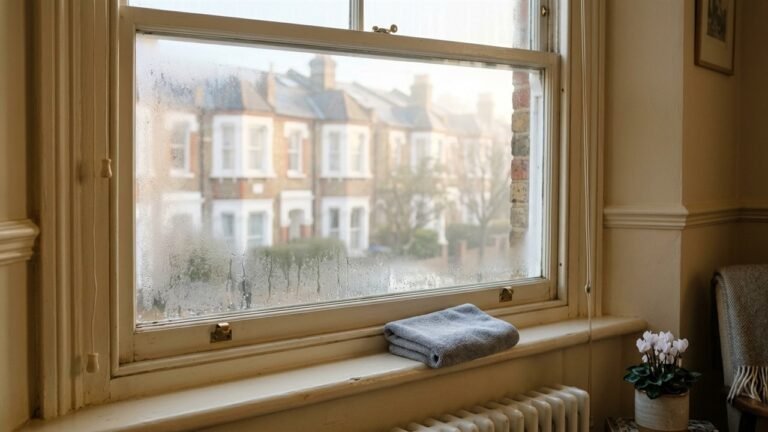
Standing beside a chilly bedroom window on a frosty January evening, it is deeply tempting to snap the plastic trickle vent firmly shut so precious warmth from your combi boiler stops leaking into the street. Yet in almost every naturally ventilated UK home, the answer is clear: yes, you should keep your trickle vents open in winter—particularly in bedrooms, kitchens, and bathrooms.
Modern double glazing and draught-proofing have sealed British homes so tightly that everyday steam from showers, kettles, cooking, and overnight breathing has nowhere to go. Leaving trickle vents open typically adds only £15 to £35 across an entire five-month winter to a standard UK gas bill—far less than the cost of heating clammy, moisture-laden air, running a dehumidifier around the clock, or repainting black mould off cold plasterboard walls every spring. The only real exceptions are homes fitted with whole-house Mechanical Ventilation with Heat Recovery (MVHR), active storm gales directly battering one facade, or short spells when running a dehumidifier inside a closed laundry room.
Quick Answer & Key Takeaways
- Default winter setting: Leave trickle vents open in occupied bedrooms, living rooms, kitchens, and bathrooms to allow slow, controlled background air exchange.
- Real heat-loss impact: Properly sized trickle vents cause minimal heat loss (roughly 1%–3% of space heating demand, or ~£15–£35 per winter)—nowhere near the heat lost by leaving a window cracked on a night latch.
- Why closing them backfires: Trapped indoor humidity climbs above 65%–70% within 48 hours, triggering dripping morning windows, swollen timber sills, and black mould in external room corners.
- When you SHOULD close them temporarily: During severe driving wind and rain hitting one side of the house (close the windward vent only, keep sheltered vents open), during Bonfire Night smoke or summer hay-fever spikes, when drying washing in a sealed room with a dehumidifier, or permanently if your flat uses a working MVHR system.
- UK Building Regulations (Part F): Since June 2022, replacement windows in naturally ventilated homes must legally include trickle vents meeting strict Equivalent Area minimums (8,000 mm² per habitable room/kitchen; 4,000 mm² per bathroom)—night latches do not legally substitute.
Damp vs Heat Loss: What Actually Happens When You Close Trickle Vents?
Before double glazing, loft insulation, and silicone perimeter seals became standard across Britain, older houses “breathed” accidentally through rattling wooden sashes, open chimneys, and unsealed floorboards. That uncontrolled leakage was freezing, yet it continuously carried indoor water vapour outdoors.
When we sealed up those accidental gaps to cut gas bills, we trapped up to 10 to 14 litres of water vapour per day generated by a typical family of four (breathing, showering, boiling pans, washing up, and drying clothes). Trickle vents are the engineered replacement for those old uncontrolled cracks. Mounted at the very top of a window frame—at least 1,700mm above the floor—they draw in a thin ribbon of cooler outdoor air high near the ceiling, where it blends gently with rising warm air from your radiators rather than dumping an icy breeze across your ankles.
What surprises most UK homeowners is the hidden physics of heating bills: dry air feels noticeably warmer and heats up faster than damp air. Indoor air sitting at 18°C and 75% relative humidity feels clammy and chilly against your skin, tempting you to nudge the thermostat up to 21°C. Meanwhile, damp plaster walls conduct heat outdoors far more rapidly than dry masonry. Shutting every trickle vent to “save £20 in gas” routinely leads households to crank the central heating higher just to feel comfortable—wiping out the tiny theoretical saving while triggering streaming morning glass. If you are already battling wet panes each morning, combine open vents with the daily steps in our guide to stopping window condensation overnight in UK homes.
Trickle Vents vs Night Latches vs Purge Ventilation: UK Heat Loss Compared
Not all winter ventilation methods affect your combi boiler equally. Many tenants shut their trickle vents because they feel a slight chill near the curtain rail, then crack the whole casement window onto the night latch for hours when windows mist up—accidentally losing five times as much heat while compromising home security. Compare how the main UK ventilation habits stack up:
| Ventilation Method | Estimated Extra Winter Gas Cost (£) | Moisture Control | Cold Draught Discomfort | Security & UK Building Regs |
|---|---|---|---|---|
| Trickle vents left open 24/7 | £15–£35 / winter (minimal steady exchange) | Strong steady baseline (keeps RH 50%–60%) | Very low (air mixes high near ceiling) | Fully locked window; Part F compliant |
| Trickle vents closed all winter | £0 direct loss (often offset by higher thermostat use) | Poor (RH spikes to 70%–85%; rapid mould) | None | Non-compliant practice; risks damp damage |
| Window cracked on night latch overnight | £90–£180 / winter (chills walls & reveals) | High airflow, but chills frame below dew point | High (cold floor draughts) | Weakens lock security; NOT Part F compliant |
| 5–10 min morning & evening purge (Stoßlüften) | £10–£20 / winter (swaps air without cooling brick) | Excellent paired with open trickle vents | Brief (5 mins only) | Safe while supervised; ideal daily booster |
| Continuous mechanical extract (dMEV) + trickle vents | ~£12–£18 electricity + £15–£25 heat loss/winter | Best non-MVHR control for damp flats | Very low | Exceeds UK Part F standards |
Notice the golden partnership at the bottom of the table: keeping trickle vents open provides gentle, continuous background dilution 24 hours a day, while throwing windows wide open for five minutes each morning flushes out concentrated overnight bedroom vapour without letting brick walls or furniture cool down. And remember—even if you are debating your boiler timer, steady gentle heating paired with open vents outperforms freezing rooms; see our full analysis of whether keeping heating on low all day actually saves money in the UK.
UK Building Regulations (Approved Document F): What Homeowners & Window Buyers Must Know
Since the updated Approved Document F (Ventilation) of the UK Building Regulations came into force in June 2022, thousands of British homeowners ordering replacement uPVC or timber double glazing have been startled to learn that FENSA- and CERTASS-registered installers can no longer leave trickle vents off simply because you dislike the look of them.
Under Part F, replacing windows in an existing home must leave the building’s ventilation no worse than before. If your old windows already had trickle vents, replacements must match or exceed their size. If your old windows lacked vents—and your home relies on natural ventilation rather than a certified whole-house MVHR system—the new frames must meet strict minimum Equivalent Area (EA) measurements tested to BS EN 13141-1 (note that Equivalent Area measures aerodynamic airflow efficiency, not just the raw physical millimetre slot cut in the frame).
| UK Room Type (Naturally Ventilated Home) | Minimum Required Equivalent Area (mm²) | Requirement With Continuous Extract (dMEV) | Typical UK Retrofit / Upgrade Cost (£) |
|---|---|---|---|
| Habitable rooms (bedrooms, living rooms, dining rooms, studies) | 8,000 mm² per room | 4,000 mm² per room | £45–£90 per vent retrofitted into uPVC/timber |
| Kitchens (and open-plan kitchen-diners) | 8,000 mm² | 4,000 mm² | £45–£90 standard; £80–£140 acoustic vent |
| Bathrooms (with or without WC) | 4,000 mm² | None required (rely on continuous fan + 10mm door undercut) | £40–£80 retrofitted |
| Utility rooms & standalone WCs | Largest practical size (no rigid statutory floor) | Continuous extract recommended | £40–£75 retrofitted |
Two common myths catch UK buyers out during window quotes: first, signing a homeowner disclaimer does NOT exempt your installer from Building Regulations—a FENSA or CERTASS fitter is legally barred from self-certifying non-compliant windows unless a genuine listed-building or conservation-area exemption applies. Second, leaving a window handle on a night-vent latch is explicitly rejected by UK Building Control as a substitute for trickle vents because locks are less secure and occupants shut them in winter. If you live beside a busy London A-road or railway line, ask your glazier for acoustic baffled trickle vents (which include internal sound-deadening foam linings cutting traffic noise by 32dB–42dB) rather than trying to omit vents altogether.
Step-by-Step: How to Manage Trickle Vents Room-by-Room in Winter
Smart winter vent management is not strictly “all open or all shut.” Follow this seven-step British household protocol to stay warm, draught-free, and mould-free from October to March:
- Check which slider position is actually OPEN: Surprisingly, half of all UK tenants guess wrongly! Stand on a sturdy step-stool and inspect the underside of the vent canopy. On most Titon, Greenwood, and Simon uPVC vents, pushing the lever upward or tilting the flap outward reveals the perforated mesh slot (open), while pushing it flush against the frame closes it. Hold a strip of tissue paper underneath—a faint flutter confirms airflow.
- Vacuum out dust, paint flakes, and spider webs: After a few years, external insect meshes clog solid with London grime, pollen, and cobwebs, halving airflow even when the slider reads open. Use a vacuum crevice nozzle inside and wipe exterior hoods gently from an open casement window each autumn.
- Leave bedroom trickle vents open every night—especially in double rooms: Two adults generate 400ml–600ml of vapour overnight. Keeping the top vent open prevents relative humidity from crossing the 65% mould threshold before dawn. Ensure curtain poles sit slightly above or clear of the vent flap so thick blackout linings do not smother the slot.
- Keep kitchen and bathroom vents open so extractor fans actually work: An extractor fan cannot suck steam out of a tightly sealed bathroom unless replacement “make-up air” can enter the room. Keep the bathroom trickle vent open (or ensure a 10mm undercut gap beneath the bathroom door) so your fan pulls moist air outdoors efficiently instead of straining against a vacuum.
- Use the “windward-side rule” during freezing storms: If a fierce 50mph westerly gale is hammering your front bay window and making the vent whistle loudly, slide only the exposed windward-side vent shut (or half-shut) while leaving sheltered rear vents open. Reopen the front vent as soon as the storm passes.
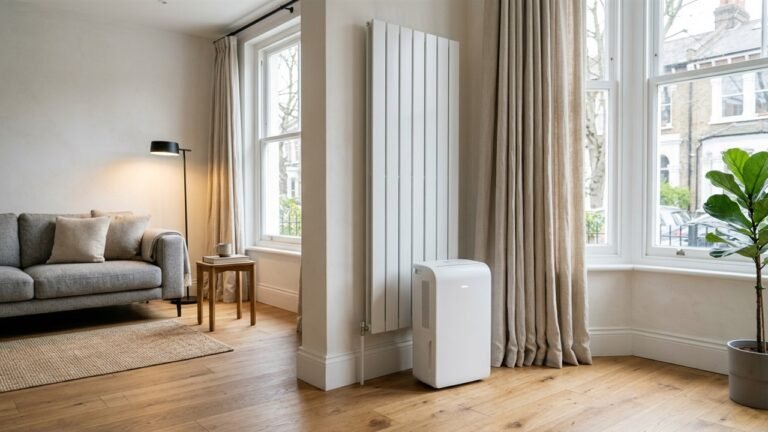
- Close vents temporarily inside a closed dehumidifier laundry room: When drying a load of wet jeans on an airer beside an electric dehumidifier, shutting the door and closing that room’s trickle vent for 4–5 hours stops damp outdoor air entering and makes the machine finish faster. Reopen the vent once the laundry is dry and the machine turns off.
- Audit your actual draughts instead of blaming the trickle vent: If your living room feels genuinely freezing near the window, the culprit is rarely a 4mm ceiling-height trickle slot—it is far more often perished rubber perimeter gaskets, misaligned uPVC hinges, an unsealed letterbox, or bare floorboard gaps. Plug genuine heat leaks first using our guide to cheap ways to draught-proof a UK flat.
Quick Decision Checklist: Open or Closed Right Now?
- Normal cold, frosty, or rainy UK winter day/night: OPEN in all habitable rooms, kitchens, and bathrooms.
- 40–60mph named storm lashing one side of the flat: CLOSED on the windward facade only; keep sheltered opposite-side vents open, and reopen once winds calm.
- Drying a 6kg laundry load with a dehumidifier inside a shut box room: CLOSED in that room only for 4–5 hours so the dehumidifier dries indoor air rather than pulling in damp street air; reopen immediately afterwards.
- Bonfire Night smoke, outdoor paint fumes, or high summer pollen count: CLOSED briefly while outdoor pollution peaks, then reopen once air clears.
- Modern airtight flat with a running MVHR whole-house system: CLOSED permanently (follow your developer’s MVHR commissioning handover manual).
How Trickle Vent Advice Changes by UK Property Type
British housing stock spans two centuries of wildly different construction standards, so your exact vent strategy depends on what kind of building you live in:
Victorian & Edwardian Terraces (Original Sash vs Retrofitted uPVC)
If your Victorian terrace still has original single-glazed timber sash windows without brush pile draught-proofing—plus open suspended timber floorboards and unsealed fireplaces—your home already has plenty of unintentional background ventilation. However, the moment you install modern sealed uPVC double glazing or brush-sealed heritage sash units, that natural leakage vanishes overnight, and solid brick walls become prime black-mould territory unless trickle vents are fitted and kept open year-round.
1930s Semi-Detached & 1950s–1970s Suburban Houses
These homes usually have retrofitted 1990s or 2000s uPVC double glazing—some with tiny undersized trickle vents, others with none at all because they predated the 2022 Part F tightening. If your upstairs bedrooms lack trickle vents and suffer corner spotting every winter, a local window fitter can often rout and retrofit overhead frame trickle vents into existing uPVC profiles for £45–£90 per window—or install a hallway Positive Input Ventilation (PIV) loft unit (£450–£800 fitted) that gently pushes filtered loft air across the landing.
Post-War Council Flats & Single-Aspect Mansion Blocks
In single-aspect council flats where all windows face the same side of the block, natural cross-breeze is weaker than in a double-fronted house. Leaving every available trickle vent open becomes doubly essential—and pairing open vents with upgraded continuous low-wattage bathroom and kitchen extractor fans (dMEV) creates steady negative pressure that pulls fresh outdoor air cleanly through the trickle slots from bedroom to wet room, slashing indoor humidity without chilly gusts.
Modern Airtight New-Builds (Post-2010 With MVHR vs Standard Extract)
Check your utility cupboard before touching vents in a modern flat! If your new-build has a large ceiling-ducted MVHR (Mechanical Ventilation with Heat Recovery) box—identifiable by circular white supply and extract grilles in every bedroom, lounge, kitchen, and bathroom—your windows will usually have no trickle vents (or vents meant to remain closed), because the MVHR system supplies pre-warmed filtered air mechanically. Conversely, if your modern flat only has standard intermittent bathroom/kitchen fans plus window trickle vents, leaving those trickle vents shut will trap moisture rapidly because new-build walls are virtually airtight.
Pro Tip: The £0 “Tissue & Paper Test” for Draughty Windows
Before blaming open trickle vents for a freezing bedroom, close the trickle vent for two minutes and slide a standard piece of A4 printer paper between the closed uPVC window sash and outer frame, then lock the handle. If the paper pulls out easily with minimal resistance along the hinge or latch edge, your rubber compression gasket or friction hinges have failed—allowing ten times more cold winter air to leak in than a trickle vent ever could. Tightening the Allen-key compression cams on the locking strip (a 2-minute DIY fix) or replacing £12 bubble gaskets stops the icy draught immediately so you can safely leave your trickle vent open.
Types of UK Trickle Vents: Standard vs Acoustic vs Humidity-Sensitive
Not every trickle vent behaves like the rattling £6 plastic strip fitted on 1990s uPVC frames. If cold blasts, city sirens, or high-rise wind howl make you dread leaving vents open, upgrading the vent hardware solves the discomfort without sealing damp air inside your home:
- Standard slot trickle vents (£8–£18 parts): Simple hit-and-miss plastic or aluminium canopies screwed over routed slots in the window sash or head frame. Cheap and effective for quiet suburban streets, though basic models offer little wind-baffling or traffic noise reduction.
- Acoustic / sound-attenuating trickle vents (£30–£75 parts): Engineered for London flats, urban terraces, and properties near main roads, railway lines, or flight paths. Internal foam-lined acoustic baffles bend incoming air so street noise drops by 32dB–42dB while maintaining full Part F Equivalent Area airflow.
- Humidity-sensitive (hygro-regulated) trickle vents (£55–£110 parts): Fitted with an internal polyamide ribbon that expands and contracts automatically with room moisture—no electricity or batteries needed. When bedroom humidity climbs overnight to 65% RH, the shutter widens silently; when rooms dry out during cold frosty mornings, it throttles back to minimise unnecessary heat loss.
- Over-frame / glazed-in vents (factory-fitted during window replacement): Mounted cleanly across the very top edge of the glazing unit or outer frame head rather than cut through narrow aluminium sashes, providing high 4,000–8,000 mm² Equivalent Area airflow with sleek sightlines for heritage or slimline frames.
5 Common Trickle Vent Mistakes UK Homeowners Make
- Stuffing toilet roll, masking tape, or expanding foam into trickle slots: Temporarily blocking vents with tape or tissue traps dust and moisture inside the hollow uPVC frame chamber, permanently ruining internal drainage channels and triggering rapid black mould growth on cold bedroom walls within weeks.
- Forgetting to reopen vents after a single cold snap: Many families shut every vent during one sub-zero week in December and never touch them again until April—allowing four months of silent condensation build-up behind curtains and wardrobes.
- Mounting roller blinds hard against the vent canopy: Inside-recess roller blinds fitted flush against the top frame choke the trickle vent completely when lowered at night, defeating the entire point of keeping the slider open.
- Putting up with roaring traffic noise instead of upgrading to acoustic vents: Basic £8 plastic strip vents let street noise straight into London bedrooms, tempting occupants to keep them permanently sealed. Swapping to acoustic baffled vents (£30–£60 parts) cuts urban traffic roar dramatically while preserving legal airflow.
- Over-painting timber trickle vents shut during decorating: Gloss paint easily glues timber vent sliders solid. Always remove plastic inner grilles with a screwdriver before painting window frames, and refit once dry.
Seasonal UK Trickle Vent Maintenance Schedule
- October (Pre-Heating Check): Open every window, gently brush and vacuum both indoor canopies and outdoor storm hoods, verify sliders move smoothly without snagging, and test window gasket compression with the paper slip test.
- November–February (Winter Monitoring): Keep vents open as default; check a £10 digital hygrometer weekly (aiming for 45%–55% RH); temporarily shut windward vents only during named storms or severe driving sleet, reopening the next morning.
- May–June (Pollen & Summer Prep): Wipe black urban soot off external fly screens with a damp microfibre cloth. Hay-fever sufferers can clip £8 replaceable pollen filter strips inside bedroom trickle vents during peak grass-pollen weeks rather than shutting off airflow completely.
UK Gas Safety & Tenant/Landlord Ventilation Notice
Never confuse window trickle vents with permanent gas-appliance wall vents: While controllable window trickle vents may be briefly closed during a fierce gale, permanent purpose-provided air bricks or louvered wall grilles serving open-flued gas fires, back boilers, or solid-fuel wood burners must NEVER be blocked, taped over, or covered. Restricting combustion air risks incomplete burning and lethal carbon monoxide build-up—always confirm with a Gas Safe registered engineer before altering any fixed wall vent.
Tenant vs Landlord Responsibilities: Tenants are expected to use provided trickle vents sensibly to help manage everyday moisture. However, if a rented flat has painted-shut windows, broken or missing trickle vent flaps, non-working extractor fans, or windows that cannot open safely, repairing or upgrading ventilation falls on the landlord under the Homes (Fitness for Human Habitation) Act 2018 and Awaab’s Law frameworks.
Frequently Asked Questions
Should trickle vents be open or closed in freezing minus temperatures?
Keep them open even when outside temperatures dip below 0°C—provided wind is not howling directly through them. Surprisingly, freezing winter air holds very little absolute moisture, so a small trickle of frosty outdoor air mixes with warm indoor air and drops relative humidity far more effectively than mild 11°C damp drizzle.
How much heat do trickle vents actually let out?
In an average UK semi-detached house or two-bedroom flat, keeping standard Part F trickle vents open accounts for roughly 1% to 3% of total annual heating demand—equivalent to roughly £15–£35 across an entire five-month winter. Because drier indoor air feels warmer and reduces damp heat conduction through walls, real-world bill differences are often barely measurable on a smart meter.
Can I close trickle vents at night if my bedroom feels too cold?
Closing the bedroom trickle vent overnight is when condensation peaks fastest because two sleepers exhale half a litre of warm moisture into a shut room. If you genuinely feel cold air dropping onto your bed, check that the vent deflector directs air upward toward the ceiling (some clips can be flipped), test the window’s rubber seals for hidden gasket leaks, and keep the radiator TRV set gently to 15°C–16°C overnight rather than sealing the vent.
Should I keep trickle vents open when using a dehumidifier?
If you are running a dehumidifier intensively inside one closed room (for instance, drying a 6kg laundry load in a box room or clearing a damp spell), closing that single room’s trickle vent for 3 to 5 hours improves efficiency so the unit does not keep pulling damp outdoor air through the slot. Reopen the vent once the cycle finishes.
My windows do not have trickle vents—can they be fitted afterwards?
Yes. Most uPVC and timber casement windows can be retrofitted with overhead trickle vents in under 30 minutes per frame by routing a slot through the sash or head frame and screwing on indoor and outdoor canopies (£45–£90 per window professionally, or £10–£18 DIY parts if you are confident drilling uPVC safely away from steel reinforcement bars). Aluminium frames and sash boxes are trickier and usually require a specialist glazier or through-wall core vent.
Why do my open trickle vents still leak loud road noise in London?
Standard hollow plastic vents offer almost no acoustic barrier because sound travels straight through the straight-line slot. Upgrading to acoustic baffled trickle vents (such as Titon SF Xtra Sound Attenuator or Greenwood acoustic canopies) bends the airflow through sound-absorbing foam chambers, dramatically muting sirens and buses while keeping Part F ventilation intact.
Do I need trickle vents open if my modern flat has an MVHR system?
No. A working Mechanical Ventilation with Heat Recovery (MVHR) system relies on an airtight building envelope so stale air is extracted through ducts and pre-warmed fresh air is supplied continuously across every room. Leaving trickle vents open in an MVHR flat bypasses the heat exchanger and reduces energy efficiency—just be sure your MVHR unit is powered on and its filters are cleaned every 3–6 months.
Can rain, spiders, or insects get inside through open trickle vents?
Properly fitted trickle vents include a downward-sloping exterior storm hood plus a built-in fine fly mesh designed to block insects and normal rainfall. If wind-driven winter rain ever drips down the inside of your frame during a storm, check outside (safely from indoors if upstairs) to see whether the exterior storm cowl has snapped off, been fitted upside down, or lost its silicone perimeter bead.
About Harry Bennett
Harry is the editorial lead at London Homecare, researching practical home maintenance, damp prevention, laundry care, and energy-saving solutions tailored to UK flats, terraced houses, and British weather conditions.