Vampire Appliances in UK Homes: Which Devices Quietly Add £150+ to Your Yearly Bill
 By Harry Bennett
•
•
14 min read
Even when every light is off and the household is fast asleep, the average UK home quietly draws between 150W and 350W of continuous background electricity — a silent “phantom load” that adds £150 to £300+ a year to your energy bill before you even boil a kettle. Forget the old myth about unplugged phone chargers costing a fortune; a modern idle USB plug costs less than 50p a year.
The real British “vampire appliances” are set-top TV boxes left in active standby, games consoles in Rest Mode, home-office docking stations, ageing AV receivers, forgotten electric towel rails, and second garage freezers humming away 24 hours a day. Using a simple rule of thumb — every single watt left running 24/7 costs roughly £2.19 a year at a typical 25p/kWh UK electricity tariff — you can hunt down your home’s worst offenders in 15 minutes using your smart meter display.
Quick Answer & Key Takeaways
- The £2.19-per-Watt rule: At a benchmark Ofgem electricity rate of 25p per kWh, 1 Watt running continuously for 8,760 hours a year burns 8.76 kWh (£2.19). Cutting just 70W of unnecessary standby load saves £153 a year.
- Worst real UK culprits: Sky Q / Virgin Media boxes (non-eco standby), PS5/Xbox in Instant-On mode, home-office PC/monitor clusters, AV receivers/subwoofers, electric bathroom towel rails left on, and old beer fridges in garages.
- Biggest myths: Modern phone chargers (under 0.3W idle = ~50p/year) and modern LED TVs in true deep standby (0.5W = ~£1.10/year) barely register on your bill.
- Do NOT unplug nightly: Leave your broadband router (to avoid ISP speed throttling), combi boiler (frost protection), fridge-freezer, and OLED TVs (overnight pixel-refresh cycle) powered on.
The Real UK Vampire Appliances: Exact Annual Cost Breakdown
UK and EU Ecodesign regulations forced manufacturers to cap modern standby power on most new gadgets at 0.5W to 1W — which is why newer appliances with red standby dots are far less wasteful than devices from the 2000s. However, “networked standby” devices (anything staying awake for Wi-Fi updates, voice wake-words, instant start-up, or remote TV recordings) are legally allowed to draw far more power.
The table below calculates realistic annual UK electricity costs using a representative Ofgem electricity unit rate of 25p per kWh. (Note: figures assume continuous standby or idle hours typical of an everyday British household.)
| Household Device (Idle / Standby State) | Typical Standby Draw | Est. Annual Use (kWh) | Yearly Cost (at 25p/kWh) | Best Fix |
|---|---|---|---|---|
| Sky Q / Virgin Media box (Active standby) | 15W – 22W | 130 – 190 kWh | £33 – £48 | Enable Eco Mode (drops overnight to ~1W–3W) |
| PS5 / Xbox Series X (Rest / Instant-On) | 8W – 15W | 65 – 120 kWh | £16 – £30 | Switch to Power Saving / Energy Saver mode |
| Home-office setup (PC sleep + 2 monitors + dock + printer) | 15W – 35W | 120 – 280 kWh | £30 – £70 | Single switched extension lead at end of workday |
| AV receiver / amplifier + wireless subwoofer | 12W – 28W | 100 – 230 kWh | £25 – £58 | Disable Network Standby or switch off at wall |
| Smart TV (Quick Start / Wi-Fi wake enabled) + soundbar | 6W – 15W | 50 – 120 kWh | £13 – £30 | Turn off Quick Start+ in TV eco menu |
| Multi-room smart speakers & displays (4–6 units) | 12W – 20W | 105 – 175 kWh | £26 – £44 | Unplug unused guest-room units |
| Electric bathroom towel rail left on 24/7 (150W) | 150W (continuous) | 1,314 kWh | £329 | Fit a £15 fused timer spur (1–2 hrs/day only) |
| Old second fridge-freezer in garage/shed (15+ yrs old) | 55W – 80W avg | 480 – 700 kWh | £120 – £175 | Decommission or only switch on for Christmas |
| Modern USB phone charger plugged in idle | 0.1W – 0.3W | 1 – 2.5 kWh | £0.25 – £0.65 | Not worth stressing over |
Add up just four ordinary British living-room and study habits — a Sky box plus mini box not on Eco mode (£50), a home-office desk left sleeping overnight (£45), an AV receiver/soundbar pair (£35), and a games console in Instant-On mode (£25) — and you are already at £155 a year in pure wasted electricity, before counting a single high-draw appliance.
How to Measure Your Home’s Phantom Load in 10 Minutes
Every flat and house is different. Instead of guessing which plugs are draining your account, run this quick late-night audit using your UK smart meter’s In-Home Display (IHD) — or a £10–£14 plug-in energy-monitoring smart plug (such as a Tapo P110 or Energenie watt meter):
- Check your smart meter live electricity reading at midnight: Turn off all lights, TVs, ovens, washing machines, and chargers, and wait five minutes. Look at the live Watts (W) or kW figure on your IHD (0.25 kW equals 250 Watts).
- Check whether your fridge compressor is cycling: A healthy modern fridge-freezer draws roughly 70W to 120W when its motor hums, dropping to ~5W when resting. Listen in the kitchen — take your baseline reading when the fridge is silent.
- Benchmark your baseload: A lean UK flat with a router, combi boiler standby, smoke alarms, and resting fridge typically sits at 50W to 100W. If your silent midnight reading is 200W, 300W, or higher, you have major hidden vampires costing £200 to £450+ a year.
- Do the circuit-by-circuit hunt: Switch off your living-room entertainment extension block and watch the IHD drop after 10 seconds. Repeat in the home office, kitchen, and hallway. If a huge 100W+ mystery load refuses to disappear, check bathroom fused switches (forgotten electric towel rail, immersion heater, or heated mirror demister), loft TV aerial boosters, and outdoor pond pumps or security floodlights stuck on.
- Calculate the exact annual saving: Multiply every 10 Watts you eliminate by £21.90 per year. Knocking your silent midnight baseload from 260W down to 160W puts roughly £219 back in your pocket every 12 months.
UK Midnight Baseload Benchmarks: What Your Smart Meter Is Telling You
Once you take that silent midnight reading on your In-Home Display (IHD) — making sure the kitchen fridge compressor is resting — compare your live Wattage against the UK household benchmarks below. Every figure is calculated over 8,760 continuous hours a year at 25p per kWh (excluding the fixed daily electricity standing charge).
| Silent Midnight Baseload | Annual Baseload (kWh) | Yearly Cost (at 25p/kWh) | What It Usually Means in a UK Home | Realistic Annual Saving |
|---|---|---|---|---|
| 50W – 85W | 438 – 745 kWh | £110 – £186 | Lean flat (router + boiler standby + fridge rest) | Already optimised |
| 100W – 160W | 876 – 1,402 kWh | £219 – £350 | Typical 2–3 bed home with TV box + smart speakers | £50 – £110/yr |
| 180W – 260W | 1,577 – 2,278 kWh | £394 – £569 | Heavy standby (office cluster + consoles + AV amp) | £140 – £240/yr |
| 280W – 400W | 2,453 – 3,504 kWh | £613 – £876 | Red flag: garage fridge, electric towel rail, or pump stuck on | £280 – £480/yr |
| 500W+ | 4,380+ kWh | £1,095+ | Faulty immersion timer, electric UFH left on, or server/aquarium | £500+/yr |
Room-by-Room UK Phantom Load Checklist (Including Heating-System Drains)
If your midnight baseload still sits frustratingly high after checking the TV stand and home office, walk room by room through these often-overlooked British background electricity users:
- Airing cupboard & boiler cupboard: Check whether a central heating circulation pump on an older system or regular boiler is humming 24 hours a day even when the thermostat is off. A stuck 3-port motorised zone valve microswitch or faulty frost thermostat can keep a 45W to 80W heating pump spinning continuously — quietly burning £100 to £175 a year in electricity while wearing out the pump bearings. Also verify that the immersion-heater backup switch is firmly OFF.
- Kitchen & utility room: Watch out for boiling-water taps (typically 15W to 25W standby = £33–£55/year to keep the under-sink tank near boiling), bean-to-cup espresso machines left in warm-plate mode, under-cupboard halogen transformers plugged in with wall switches on, and older freestanding tumble dryers or washing machines with illuminated control panels that stay energised until dialled to “Off”.
- Living room & bedrooms: Look behind the sofa and TV unit for forgotten Sky Q Mini boxes, Apple TV / Fire TV sticks powered via wall adapters, subwoofer power amplifiers with no auto-sleep, and powered indoor TV aerial boosters.
- Loft, hallway & garden: Older loft TV distribution amplifiers (5W–10W), heated fish tanks (50W–150W), outdoor pond pumps, or PIR security floodlights whose motion sensor has jammed permanently on (a single 100W halogen floodlight stuck on overnight costs roughly £100+ a year).
Does Cutting Phantom Load Still Matter on Time-of-Use Tariffs?
More UK households are switching to off-peak or smart time-of-use tariffs — such as Economy 7, EV overnight tariffs (charging 7p to 9p/kWh between midnight and 5 am), or half-hourly dynamic tariffs like Octopus Agile. While shifting dishwashers, washing machines, and tumble dryers into cheap overnight windows saves serious money, time-of-use tariffs actually make vampire standby loads MORE expensive during peak daytime hours. Peak daytime electricity on EV and Economy 7 tariffs often sits at 27p to 32p/kWh for 17 to 19 hours every day — meaning a 70W daytime vampire cluster burns even more cash than on a flat single-rate Ofgem price cap tariff.
7 Easy Fixes That Cut Phantom Load Without Disrupting Daily Life
Nobody wants to crawl behind a heavy sideboard every night to unplug six sockets. The smartest UK homes eliminate vampire load automatically using settings menus and switched sockets:
1. Turn On “Eco Mode” on Sky Q, Sky Stream, and Virgin Media Boxes
On Sky Q, head to Settings > Setup > Preferences > Standby Mode and select Eco (not Active or None). Your box still records scheduled evening shows, then drops into ultra-low-power deep sleep between 2:30 am and 5:45 am — and remember to change the same setting on any Sky Q Mini boxes in bedrooms. On Virgin Media TV 360 / V6, switch standby power mode to Eco (taking an extra 20 seconds to boot in the morning saves £25 to £40 a year).
2. Switch PlayStation 5 and Xbox Out of Instant-On Mode
On Xbox Series X/S, go to Settings > General > Power Options and choose Shutdown (Energy Saving) instead of Sleep — Microsoft’s own data shows this cuts idle consumption by up to 20 times while still allowing scheduled overnight updates efficiently. On PlayStation 5, set Rest Mode to disable 24/7 USB power and turn the console fully off rather than leaving it in Rest Mode all week when you only game on weekends.
3. Put Your Entire Home Office on One Switched Extension Strip
Hybrid working turned spare bedrooms across Britain into miniature server rooms. A laptop charger brick, USB-C docking station, twin 27-inch monitors, desk lamp, powered speakers, and wireless printer plugged into separate wall sockets easily pull 20W to 40W all evening and all weekend. Plug all of them into a single quality individually switched or master-switched surge-protected extension lead (£12–£18) mounted neatly on the desk edge so one click at 5:30 pm kills the entire cluster to zero watts.
4. Disable “Quick Start” and “Network Standby” on TVs and Audio Amps
Many Samsung, LG, Sony, and Hisense smart TVs ship with “Quick Start+” or “Wake on Mobile/Wi-Fi” toggled on, keeping internal processors and Wi-Fi chips powered continuously just to shave three seconds off boot-up time. Turning that off inside the TV’s General/Eco menu drops standby draw back down to ~0.5W. Do the exact same inside Denon, Yamaha, or Sonos amplifier settings if you rarely wake them remotely.
5. Audit Hidden Fused Spurs: Immersion Heaters & Electric Towel Rails
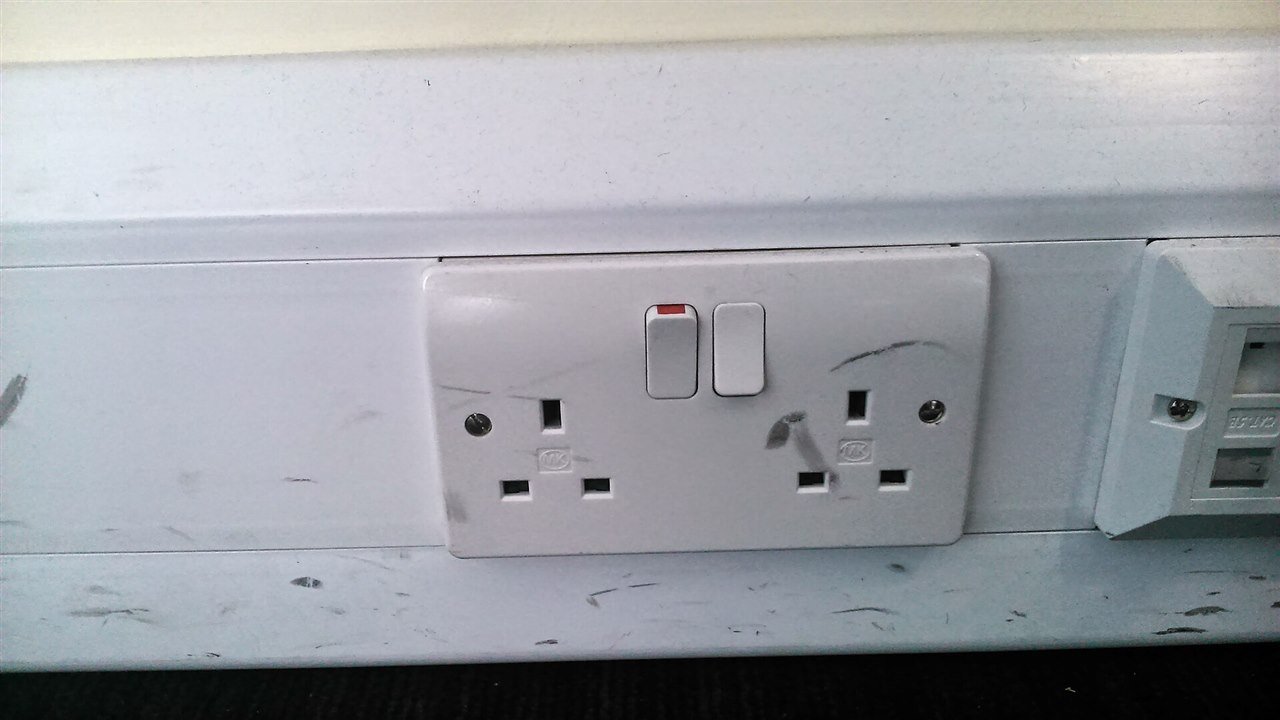
If your smart meter shows an inexplicable daytime or overnight jump, check every unlabelled white fused wall switch with a tiny red neon light in your airing cupboard, kitchen, and bathroom. An electric immersion heater accidentally flicked on in a hot water tank pulls 3,000W (75p per hour), while a modest 150W electric bathroom towel rail left on 24/7 burns over £320 a year. Swap simple on/off towel-rail switches for a £15 programmable boost timer (1 hour after morning showers, 1 hour in the evening).
6. Retire That Old Garage “Drinks Fridge”
Keeping an old 15-year-old kitchen fridge-freezer running in an unheated garage or utility shed to chill six cans of lager and a spare bag of frozen peas is one of the priciest hidden electricity drains in Britain. Older inefficient compressors with worn rubber door seals routinely consume 500 to 700 kWh per year (£125 to £175) — and many standard indoor fridge-freezers actually malfunction in freezing garages below 10°C anyway. Unplug it cleanly with doors propped ajar except during Christmas week or summer barbecues.
7. Pair Standby Cuts With Smarter Active-Appliance Habits
Cutting vampire standby is the easiest first £150 saved, but your biggest overall electricity savings come from combining it with smart active-appliance choices. Check how much you can save comparing a heated airer vs tumble dryer running cost in the UK, tracking the real dehumidifier running cost in 2026, picking the best washing temperature for UK energy bills, and tackling gas bills too by lowering your combi boiler flow temperature to 60°C.
5 Things You Should NOT Switch Off at the Mains Every Night
Aggressive unplugging can backfire and cost you more in repairs than you ever save in electricity. Leave these five items powered on:
- Your Wi-Fi broadband router: Turning off a UK Openreach/BT/Sky/TalkTalk router every night triggers automated Dynamic Line Management (DLM), which interprets daily disconnections as an unstable line and throttles your broadband speed — while also blocking overnight security firmware patches. (A router typically costs £15 to £22/year.)
- OLED televisions immediately after watching: LG, Sony, and Panasonic OLED screens run automatic short “pixel-refresh” compensation cycles during standby minutes after switching off to prevent permanent screen burn-in. Cutting mains power at the wall interrupts this cycle and can ruin a £1,200 screen.
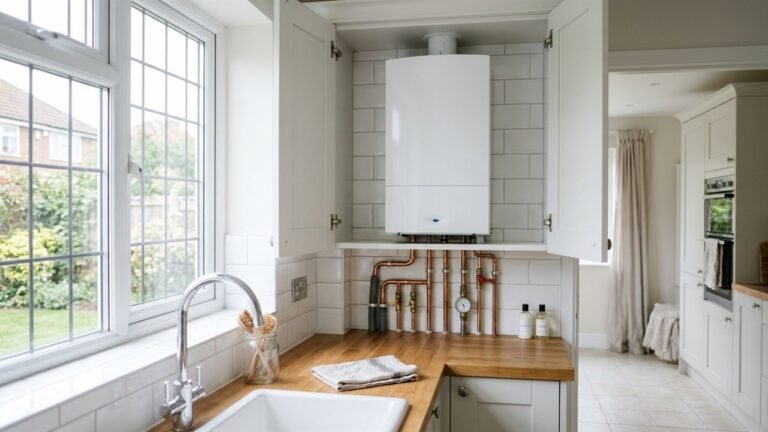
- Your combi boiler or central heating controls: Modern boilers draw only 3W to 6W on standby (~£7–£13/year) and need continuous mains power to run anti-seize pump exercises and winter frost-protection cycles.
- Inkjet printers that self-clean on power-up: Switching some inkjet printers off at the wall forces an automatic printhead cleaning cycle every time you turn them back on, wasting far more money in £30 ink cartridges than the £2 a year saved in standby electricity.
- Smart home security hubs, smoke/CO alarms, and fridge-freezers: Never compromise safety or food hygiene for a few pence of electricity.
UK Electrical Safety Warning: Smart Plugs & Extension Leads
Never overload extension leads or smart plugs: A standard UK mains socket and 13-amp fused extension lead is rated for a strict maximum of 13 amps (3,000W to 3,120W total). Never plug high-wattage heating or laundry appliances — such as kettles, tumble dryers, washing machines, fan heaters, oil-filled radiators, or electric ovens — into multi-way extension leads or cheap uncertified smart plugs, and never daisy-chain one extension lead into another.
If you buy Wi-Fi energy-monitoring smart plugs to track vampire loads, check that they carry genuine BS 1363 and UKCA/CE safety certification and match the required amp rating (13A max). Keep high-draw white goods plugged directly into dedicated wall sockets, and ask a NICEIC- or NAPIT-registered electrician if you want fixed timer spurs installed for bathroom towel rails or immersion heaters.
London flat & tenant meter check: In converted Victorian houses split into separate flats, an unexplained constant 100W–300W load that stays present even when you switch off your own flat’s main breakers can occasionally mean communal hallway lighting, a shared door-entry system, or a neighbour’s immersion heater is accidentally wired to your meter. Run a quick “creep test” by switching off your own consumer unit for five minutes and checking whether your meter stops flashing or advancing — if it keeps clocking up kWh, contact your energy supplier and landlord immediately.
Frequently Asked Questions
Do phone chargers left plugged in with no phone attached waste electricity?
Barely any. Modern branded UK USB chargers draw roughly 0.05W to 0.3W when nothing is plugged in — costing between 10p and 65p per year at 25p/kWh. Switching them off at the wall is good fire-safety practice (especially with cheap unbranded chargers), but it will not noticeably move your electricity bill.
Do smart plugs use electricity themselves — are they actually worth buying?
A typical Wi-Fi smart plug draws around 0.5W to 1W continuously (costing roughly £1.10 to £2.20 a year). Putting a £10 smart plug on a single modern TV that only uses 0.5W in standby actually wastes money. Smart plugs only pay for themselves when controlling high-vampire clusters (like a 25W home-office desk or AV amp) or acting as a diagnostic watt meter to uncover hidden drains.
How much does a UK kettle or microwave clock cost on standby?
A kettle on its base uses 0W when switched off (only smart Wi-Fi kettles draw standby power). A microwave or built-in electric oven digital LED clock typically uses 1W to 3W, costing roughly £2.20 to £6.60 a year — modest individually, though easy to switch off on a countertop microwave if you do not rely on its clock.
Why is my electricity smart meter showing 200W+ when everything is off?
A silent baseload over 200W usually points to one of five things: a fridge-freezer compressor currently mid-cycle (check again 20 minutes later), a Sky/Virgin box plus gaming/office gear in active standby, an electric bathroom towel rail or underfloor heating mat left switched on, an immersion heater element or fish tank heater, or an old second fridge running in the garage or utility room.
Does turning off appliances at the wall socket save more than using the remote?
Yes — switching off at the UK wall socket cuts power draw completely to 0W, whereas pressing the remote puts the device into standby (anywhere from 0.5W on a modern TV up to 25W on an older AV amplifier or set-top box). It makes the biggest financial difference on clustered home-office and audio-visual gear plugged into an easy-to-reach switched extension strip.
Can a faulty central heating pump or boiler cause a mysteriously high electricity bill?
Yes — this is one of the most commonly missed electrical drains in British houses with system or regular boilers. If an external circulation pump stays running continuously because of a seized motorised zone-valve microswitch or a faulty frost thermostat, an older fixed-speed Grundfos pump pulls 60W to 90W non-stop — quietly adding £130 to £200 a year to your electricity bill even through July. If your airing cupboard hums when both heating and hot water are switched off, have a heating engineer check the motorised valve and pump overrun wiring.
How much electricity do UK broadband routers and mesh Wi-Fi pods cost per year?
A standard UK broadband router (BT Smart Hub, Sky Hub, Virgin Media Hub) typically draws 7W to 12W continuously — costing around £15 to £26 per year at 25p/kWh. Adding three mesh Wi-Fi boosters or powerline adapters adds another 12W to 18W (£26 to £39/year). Keep your main router plugged in 24/7 so your ISP does not throttle your broadband speed, but unplug any extra mesh node in a spare room you barely use.
Why does my smart meter still show around 60p a day even when I go on holiday and unplug everything?
That fixed daily figure is your UK electricity standing charge (typically around 55p to 65p per day depending on your region under Ofgem’s price cap), plus another ~30p/day for gas if you have a gas supply. Standing charges cover meter maintenance and National Grid upkeep regardless of usage — so cutting phantom load reduces your unit consumption above the standing charge rather than zeroing out the daily fee completely.
About Harry Bennett
Harry is the editorial lead at London Homecare, researching practical home maintenance, damp prevention, laundry care, and energy-saving solutions tailored to UK flats, terraced houses, and British weather conditions.