Black Mould on Bedroom Walls in the UK: Safe Removal and How to Stop It Returning
 By Harry Bennett
•
•
15 min read
Pulling a wardrobe away from an external bedroom wall in mid-winter only to find fuzzy dark patches spreading across the emulsion is one of the most stressful sights in any British home. To remove black mould from bedroom walls safely, never dry-brush or vacuum it—wear an FFP3 mask and rubber gloves, apply a UK HSE-approved fungicidal wash or distilled white vinegar to dampen and kill the spores, wipe clean with disposable cloths, and eliminate the cold-wall moisture trap so it does not return within a fortnight.
Across the UK, bedroom black mould—most commonly Cladosporium or Aspergillus, and occasionally Stachybotrys on chronically soaked plasterboard—almost always grows in the exact same places: external top corners where concrete lintels create a cold bridge, behind fitted wardrobes pushed tight against north-facing walls, and around streaming window reveals. Scrubbing it off with ordinary household bleach turns the wall white for ten days, yet the roots often survive beneath porous matt emulsion unless you treat the surface and lower room humidity properly.
Quick Answer & Key Takeaways
- Best treatment for painted bedroom plaster: Use a UK-registered fungicidal wash (e.g., Polycell 3-in-1 Mould Killer or Zinsser Mould Killer & Remover, £6–£12) rather than thin domestic bleach, which fades surface colour without reliably killing roots in porous paint.
- Never mix cleaners: Mixing bleach-based mould spray with white vinegar or ammonia releases dangerous chlorine gas. Stick strictly to one product per wall.
- Never dry-brush or vacuum: Scraping dry mould sends thousands of microscopic spores directly onto your bedding, carpet, and curtains.
- DIY size limit: You can tackle light surface patches under roughly 1 square metre yourself. Larger outbreaks, crumbling plaster, or recurrent wet walls require a damp specialist or your landlord to investigate structural causes.
- Stop it coming back: Pull beds and wardrobes at least 5–10cm away from cold external walls, keep bedroom relative humidity under 55%, and treat any window condensation every morning.
Why Bedroom Walls Are Prime Mould Magnets in UK Homes
Bathrooms get the obvious steam, yet bedrooms suffer the stubbornest black mould across Victorian terraces, 1930s semis, and ex-local authority council flats alike. Three British housing quirks explain why:
- Stagnant air behind furniture: UK bedrooms are famously compact, forcing wardrobes, chests of drawers, and headboards hard against exterior walls. Without moving air, that thin gap drops 4°C to 6°C colder than the rest of the room, creating a dark, chilly microclimate where condensation settles unseen for months.
- Thermal bridging in upper corners: Where an uninsulated solid brick wall meets a cold loft ceiling—or around steel and concrete window lintels—heat escapes rapidly. Even if the thermostat reads 19°C, that top corner plaster can sit at 11°C, right below the dew point.
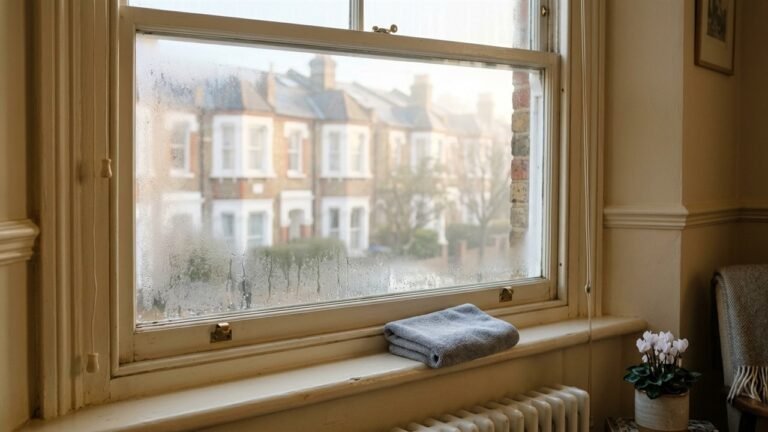
- Unheated overnight moisture: Most UK households switch the combi boiler off at night while two sleepers breathe out half a litre of water vapour into a closed room. If your panes are dripping each morning, tackle that first using our guide on how to stop window condensation overnight.
Before blaming condensation alone, check whether the wall feels wet to the touch or has tide marks, flaking salts, or peeling wallpaper. A cracked rainwater downpipe, slipped roof tile, or failed exterior pointing can soak brickwork from outside—our guide to telling condensation, penetrating damp, and rising damp apart walks you through a quick five-minute home diagnosis.
Bleach vs White Vinegar vs Fungicidal Wash: What Actually Works?
Walk down the cleaning aisle at B&Q, Screwfix, or Tesco and you will see three main options alongside a dozen internet remedies. Picking the wrong one either ruins your paintwork or leaves viable fungal hyphae alive inside the plaster skim.
| Treatment | Typical UK Cost | Kills Spores & Roots? | Best Surface | Pros & Drawbacks on Bedroom Walls |
|---|---|---|---|---|
| HSE-approved fungicidal wash (e.g., Polycell, Zinsser, Dryzone) | £6–£14 per bottle | Yes — penetrates porous emulsion & plaster | Painted walls, ceilings, timber reveals | Best overall choice. Low odour, leaves a short-term biocide residue, prepares wall for repainting. |
| Chlorine bleach mould spray (e.g., HG Mould Spray, Cillit Bang) | £4–£7 per bottle | Surface only on porous plaster; full kill on tiles | Glazed tiles, grout, uPVC window frames | Instantly erases black pigment, but strong fumes and can bleach wallpaper or coloured paint. Rinse thoroughly. |
| Distilled white vinegar (5% acetic acid) | £1–£2 per 500ml | Kills ~80% of common indoor mould species | Light patches on painted walls, wood, metal | Cheap, non-toxic, penetrates slightly better than bleach. Smells sharp for 1–2 hours; does not remove dark staining. |
| Hydrogen peroxide (3% solution) | £3–£6 at UK pharmacies | Yes — mild anti-fungal & gentle bleaching | White matt emulsion, light-coloured plaster | No harsh chlorine smell, gently lifts grey stains. Patch-test on dark paint first. |
| Bicarbonate of soda paste / tea tree oil | £2–£6 | Very mild surface cleaner only | Light mildew on washable surfaces | Safe for spot-wiping, but too weak for established black mould colonies on damp plaster. |
Avoid using a domestic steam cleaner on mouldy bedroom plaster. While high heat kills surface spores on hard bathroom tiles, pumping pressurised steam into porous gypsum plasterboard adds extra moisture, blisters emulsion paint, and can blow airborne spores across the bedroom.
Step-by-Step: How to Remove Black Mould from Bedroom Walls Safely
Set aside an hour on a dry morning so you can leave the bedroom window open afterwards. Never tackle mould right before bedtime if you are using chemical sprays—you want any odour and airborne moisture completely cleared before sleeping in the room.
- Protect yourself and clear the zone: Put on disposable nitrile or rubber gloves, eye protection (if working overhead near ceiling corners), and an FFP3 respirator mask (around £3–£5 from Screwfix or Toolstation—ordinary cloth masks do not filter fine fungal spores). Pull the bed and furniture away from the wall, strip any bedding that touched the patch to wash at 60°C, and cover nearby carpet with a cheap dust sheet or old newspaper.
- Close the bedroom door and open the window wide: Shutting the interior door stops disturbed spores drifting down the landing into other rooms, while opening the window vents chemical fumes outside.
- Apply fungicidal wash (or white vinegar) without scrubbing dry: Dampen a disposable microfibre cloth or sponge—or mist gently directly onto the wall from 15cm away—using a UK fungicidal wash diluted per the label (or undiluted white vinegar for small light spots). Avoid blasting the patch with a fierce jet stream that splatters spores onto clean paint.
- Respect the dwell time: Leave the solution on the plaster for the exact period stated on the bottle—usually 15 to 30 minutes for biocide washes, or 60 minutes for white vinegar. This allows the active ingredient to soak into the paint film and neutralise fungal roots.
- Wipe gently from the outside inwards: Using a clean damp rag, wipe the dead mould off in smooth strokes moving from the outer edge of the patch toward the centre so you do not smear spores outward. Rinse the cloth in a bucket of soapy water—or better yet, fold and swap disposable blue roll/cloths frequently—and drop soiled cloths straight into a heavy-duty rubble sack or bin bag.
- Dry the wall thoroughly: Pat the area dry with clean kitchen towel, then point a desk fan or dehumidifier toward the corner for 2 to 4 hours until the plaster is bone dry. Leaving freshly cleaned walls damp practically invites fresh spores in the air to colonise the exact same patch.
- Bag waste and wash up: Tie the disposal bag tightly and take it straight to the outdoor wheelie bin. Wash your gloves, change out of the clothes you wore, and launder them immediately rather than shaking them out indoors.
What If Black Mould Is Inside Silicone or Around Window Frames?
On painted timber window boards or uPVC frames, fungicidal wash wipes clean easily. However, once black mould grows inside flexible silicone sealant along an en-suite or bay window edge, no spray will reach beneath the rubberised skin. In those spots, the cleanest long-term repair is stripping out the ruined bead and re-sealing with sanitary-grade mould-resistant silicone—our step-by-step walkthrough on replacing mouldy silicone sealant works identically for bedroom window edges.
Repainting After Mould Removal: Stain-Blockers & Anti-Mould Paint
Even after the mould is completely dead, grey or tea-coloured staining often lingers in white matt emulsion. Never slap standard £15 contract emulsion directly over a cleaned mould patch: ordinary paint contains organic fillers that fresh mould can feed on, and dark stains will bleed right back through two coats.
Follow this trade-standard repainting sequence once the wall has been dry for at least 48 hours:
- Step 1 — Stain-blocking primer: Apply one coat of a shellac or oil-based stain blocker such as Zinsser B-I-N or Zinsser Cover Stain (~£18–£24 per litre) over the discoloured patch to lock dead tannins and water marks behind an impermeable seal.
- Step 2 — Biocide anti-mould emulsion: Top-coat the entire wall (or affected corner blended cleanly) with two coats of a specialist anti-mould paint such as Zinsser Perma-White, Dulux Trade Mouldshield Fungicidal Matt, or Ronseal Anti-Mould Paint (£28–£45 per 2.5L). These contain slow-release fungicides rated to resist regrowth for 3 to 5 years.
- Step 3 — Consider thermal lining paper or insulating paint only on cold bridges: On a chronically freezing external Victorian gable wall, thermal anti-condensation paint (containing hollow glass microspheres) or 4mm Wallrock Thermal Liner raises the wall surface temperature by 1°C to 3°C—often just enough to lift a stubborn corner above the dew point.
Check Behind Built-In Wardrobes & Under Bed Frames
If your bedroom has a musty odour despite spotless visible walls, check the thin hardboard backing of freestanding wardrobes pushed against external walls and lift your mattress slats. Ottoman storage beds crammed tightly with winter duvets trap stale moisture underneath. Switching to slatted wooden bases, leaving a 5–10cm airflow gap behind furniture, and fitting £4 louvred air vents into solid wardrobe doors eliminates hidden stagnant zones fast.
How to Stop Black Mould Returning Permanently
Anti-mould paint buys you breathing room, not immunity. If moisture keeps condensing onto that cold external corner every winter night, mould will eventually grow on household dust sitting on top of the biocide paint. Permanent prevention relies on four habits:
- Track bedroom humidity with a £10 hygrometer: Place it on the bedside table—not on a radiator. Keep daytime and evening readings between 45% and 55% RH. Sustained readings above 65% mean moisture is winning.
- Maintain steady gentle warmth: Allowing a spare bedroom or master bedroom to drop below 14°C in winter causes wall surfaces to plummet below dew point. Even turning the thermostatic radiator valve (TRV) to setting 2 keeps background wall temperatures noticeably safer than shutting the radiator completely off.
- Check loft insulation right into the eaves: If black mould forms a crisp horizontal stripe along the top of an upstairs bedroom wall where it meets the ceiling, poke your head into the loft. Missing or squashed fibreglass insulation at the eaves creates an ice-cold band right across the plasterboard ceiling edge. Topping up loft roll to 270mm (leaving a 50mm eaves ventilation gap so roof timbers breathe) frequently cures upstairs corner mould overnight.
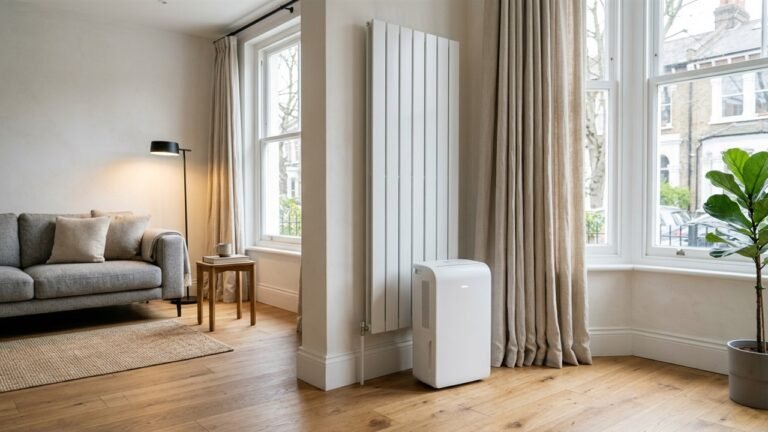
- Ventilate and dehumidify smartly: Keep window trickle vents open, run bathroom extractors for 20 minutes after hot showers, never dry damp washing on bedroom airers without a compressor dehumidifier running alongside, and open windows wide for five minutes each morning to purge overnight vapour.
UK Anti-Mould Paint & Cold-Wall Upgrade Cost Comparison
If black mould keeps reappearing in the exact same bedroom alcove every winter despite good ventilation, upgrading the wall finish—or tackling the underlying cold surface—pays off quickly. Here is how UK decorating and thermal lining options compare for an average 12m² external bedroom wall:
| Product / Upgrade | Typical UK Material Cost | Raises Wall Temp? | Mould Protection Lifespan | Best Used For |
|---|---|---|---|---|
| Zinsser B-I-N Shellac Primer (stain block) | £18–£24 per 1L | No | Permanent stain seal beneath topcoat | Locking out yellow water marks & grey spore stains before repainting |
| Zinsser Perma-White / Dulux Mouldshield | £28–£45 per 2.5L | No | 3–5 years active biocide film | Repainting whole bedrooms & ceilings prone to winter humidity |
| Thermal anti-condensation paint (e.g., Thermilate / Dryzone) | £35–£55 per 2.5L | Slight (+1°C to +2°C) | 3–5 years | Mild cold bridges around window reveals and upper ceiling edges |
| Wallrock Thermal Liner (3.2mm–4mm) | £65–£95 per 10m roll + adhesive | Moderate (+2°C to +4°C) | 10+ years (once painted) | Freezing Victorian solid brick walls where full dry-lining is too thick |
| Insulated plasterboard dry-lining (27mm–50mm PIR) | £450–£1,200 fitted per wall | High (+5°C to +8°C) | Permanent structural cure | Chronically cold gable ends and uninsulated solid-wall bedrooms |
Bedroom Black Mould by UK Property Type: Where It Hides & Why
The way British homes were built over the past 150 years dictates exactly where bedroom mould strikes—and which fix works without wasting money on the wrong remedy.
Victorian & Edwardian Terraces (Pre-1920)
Solid nine-inch brick external walls lose heat three times faster than modern cavity walls, creating frigid surfaces behind bedroom wardrobes and beside bay windows. A second classic hotspot is the capped chimney breast: if an unused fireplace was bricked up without fitting a hit-and-miss air vent and breathable chimney cowl on the roof pot, trapped moisture and hygroscopic flue salts draw damp straight into the bedroom plaster—producing dark blotches halfway up the chimney breast that never respond to dehumidifiers alone.
1930s Semi-Detached & Post-War Cavity Homes
Many 1930s–1960s semis had retrofitted blown-fibre cavity wall insulation injected decades ago. Where insulation slumped or missed narrow strips near upstairs window frames and gable peaks, sharp ice-cold rectangles appear on bedroom walls—leading to sudden, patchy black mould right where the missing insulation sits. A quick £30 infrared surface thermometer gun (available at Screwfix or Amazon UK) immediately reveals cold spots 4°C–6°C cooler than adjacent plaster.
1960s–1980s Post-War Council Flats & Tower Blocks
Concrete-framed ex-local authority flats often feature exposed structural ring beams and balcony floor slabs running straight from outside to inside—classic geometric thermal bridges. Mould typically forms a razor-sharp dark band along the top ceiling junction and inside recessed concrete window reveals. Because single-aspect council flats cannot cross-ventilate easily, pairing continuous background trickle ventilation with a dedicated compressor dehumidifier (kept below 55% RH) and Wallrock thermal lining paper on exposed concrete reveals delivers the biggest win.
Modern Airtight New-Builds & En-Suite Master Bedrooms (Post-2010)
In newer flats and houses, bedroom mould rarely stems from uninsulated walls—it almost always traces back to a steamy en-suite shower room whose extractor fan is either switched off at the wall isolator, clogged with lint, or runs on too short an overrun timer (under 15 minutes). Warm vapour spills straight out of the en-suite into the cooler master bedroom, settling behind upholstered headboards and inside fitted walk-in wardrobes.
5 Common Mistakes UK Homeowners Make When Treating Bedroom Mould
- Using a household Henry or Dyson vacuum on mouldy plaster: Standard domestic vacuums without sealed medical-grade HEPA H13/H14 filtration suck spores in at the nozzle and blast fine invisible particles straight out of the exhaust vent across your bedroom air and pillows.
- Mixing bleach mould spray with white vinegar: Many people spray vinegar first and follow up with HG Mould Spray or thin Domestos to “double-clean” the stain. Mixing acid (vinegar) and sodium hypochlorite (bleach) instantly produces toxic chlorine gas. Wait at least 24 hours and rinse thoroughly with plain water before ever switching chemical families—or stick to one HSE-approved fungicidal wash.
- Ignoring soft furnishings, curtains, and wardrobe backboards: Cleaning the wall while leaving speckled curtain linings or damp MDF wardrobe backs untouched lets spores reseed the freshly washed paint within days. Wash curtain linings at 40°C–60°C (check care labels) with an antibacterial laundry cleanser, and wipe hardboard backs with white vinegar before drying outdoors or beside a dehumidifier.
- Repainting before the plaster is genuinely dry: Emulsion traps residual moisture inside gypsum skim plaster, causing fresh blistering and dark speckles inside three weeks. Always dry the cleaned wall with a fan or dehumidifier for at least 48 hours first.
- Overlooking blocked gutters or cracked render outside: If black mould clusters in one isolated wet patch halfway down an upstairs external wall—with zero condensation on the windows—step outside during heavy rain. An overflowing cast-iron hopper, slipped slate, or cracked pebbledash render often soaks the brick from behind.
Seasonal UK Bedroom Mould Prevention Schedule
- September–October (Before Heating Goes On): Pull wardrobes away from external walls once to vacuum dust and confirm a 5–10cm airflow gap, check loft insulation extends cleanly to the eaves above every bedroom corner, and test en-suite/bathroom extractor suction.
- November–February (High-Risk Winter Months): Monitor bedside hygrometer readings weekly (aiming for 45%–55% RH), wipe window reveals dry every morning, keep trickle vents unblocked, and avoid dropping bedroom temperatures below 15°C overnight.
- April–May (Dry-Weather Decorating Window): If winter left staining or flaking paint on a cold external wall, wait for mild spring weather to stain-block with Zinsser B-I-N and apply two coats of anti-mould matt emulsion—paint cures far harder and bonds properly in low indoor humidity.
UK Safety, Health & Tenant Rights Warning
When NOT to clean black mould yourself: Do not attempt DIY removal if the affected area exceeds roughly 1 square metre, if plasterboard is soggy, swollen, or crumbling, or if the damp smells earthy and originates from sewage, a burst pipe, or a leaking roof. Households with young children, older adults, asthma, or respiratory sensitivities should avoid exposure during cleaning and consult an NHS GP or pharmacist if anyone experiences persistent coughing or wheezing.
UK Renter Rights (Awaab’s Law & Fitness for Human Habitation): Under the Homes (Fitness for Human Habitation) Act 2018 and Awaab’s Law (active in social housing and extended into private tenancies via the Renters’ Rights Act), landlords must investigate serious damp and mould hazards promptly and carry out structural or ventilation repairs—not simply hand tenants a bottle of spray. Photograph dated evidence, keep hygrometer logs, report in writing, and read our detailed breakdown of landlord vs tenant responsibilities for damp in the UK if repairs stall.
Frequently Asked Questions
Does painting over black mould kill it?
No. Painting straight over live black mould—even with anti-mould paint—traps active spores and organic staining underneath. Within weeks, dark blotches bleed back through the emulsion and the paint film begins bubbling or peeling. Always kill and remove the mould with a fungicidal wash and dry the wall completely before priming and repainting.
Can I sleep in my bedroom the same night after using mould remover?
Only if you cleaned in the morning, used a low-odour fungicidal wash or white vinegar, and ventilated the room thoroughly for several hours until all fumes have cleared. If you used a strong chlorine-bleach spray late in the afternoon and the room still smells sharp at bedtime, sleep in another room for the night and leave the window ajar.
Why does black mould only grow in the top corner of my bedroom ceiling?
Upper external corners are the coldest point in almost any UK bedroom because two exterior walls meet the cold loft space, creating a sharp thermal bridge, while warm air rising from the radiator rarely circulates tightly into corners. Checking for missing loft insulation above that exact corner and improving bedroom ventilation usually solves it.
Should I wipe bedroom mould with white vinegar or bleach?
On porous painted plaster, distilled white vinegar or a dedicated HSE-approved fungicidal wash is far better than household bleach. Bleach primarily removes surface colour while its high water content soaks into plaster, leaving roots intact—and it can damage coloured emulsion or wallpaper. Reserve chlorine mould sprays for non-porous bathroom tiles and uPVC frames.
What if black mould is growing on wallpaper?
Porous paper wallpaper and starch-based wallpaper paste act as a food source for mould. While very faint surface spots on vinyl-coated wallpaper can be gently wiped with fungicidal wash, dark mould that has soaked behind paper seams cannot be reliably cleaned—you will need to strip the affected drop, treat the bare plaster underneath, let it dry, and redecorate once the damp source is fixed.
How quickly does black mould grow back after cleaning if humidity stays high?
In a cold UK bedroom sitting above 70% relative humidity, dormant airborne spores can germinate on a freshly wiped wall within 24 to 48 hours and form visible black colonies again in as little as 10 to 14 days. Treating the wall with a residual fungicidal wash buys several weeks, but permanent control always requires lowering indoor humidity below 55% or warming the cold wall surface.
Can black mould transfer to clothes and mattresses—and can I save them?
Yes—clothes packed tightly inside wardrobes pushed against cold exterior walls often develop grey-green mildew speckles and a damp cellar odour. Wash machine-washable cottons and bedding at 60°C (or 40°C with a non-bleach laundry sanitiser like Dettol Laundry Cleanser) and dry thoroughly outdoors or with a dehumidifier. Light surface spotting on a mattress can be dabbed with a cloth wrung out in 50/50 rubbing alcohol and water then air-dried completely, but deep black spotting inside foam or pocket springs usually means the mattress should be replaced.
About Harry Bennett
Harry is the editorial lead at London Homecare, researching practical home maintenance, damp prevention, laundry care, and energy-saving solutions tailored to UK flats, terraced houses, and British weather conditions.