How to Descale a Kettle in London’s Hard Water Without Harsh Chemicals
 By Harry Bennett
•
•
15 min read
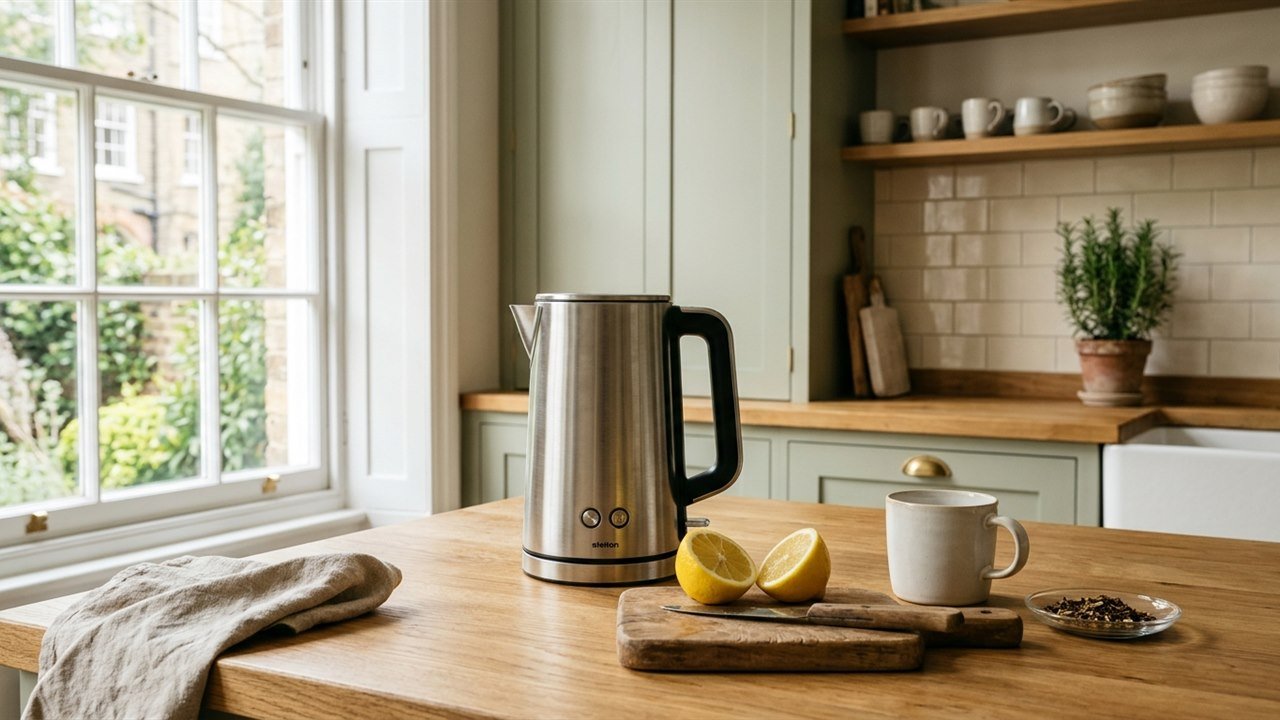
Pour a mug of tea in London, Kent or Essex and there is a fair chance chalky white flakes are already floating on the surface. Thames Water and neighbouring South East suppliers deliver some of the hardest tap water in Britain—commonly measuring 250 to 330 mg/L of calcium carbonate—which coats a brand-new kettle’s concealed heating element inside a fortnight.
You do not need harsh chemical sachets or acrid descaling liquids to shift it. Dissolving one to two tablespoons of food-grade citric acid powder in half a kettle of just-boiled water clears thick London limescale in 15 to 20 minutes for roughly 12p a clean, leaving zero lingering odour or vinegary aftertaste in your next brew.
Quick Answer & Key Takeaways
- Best overall method: Dissolve 1–2 level tablespoons (15–30g) of food-grade citric acid in 500–750ml of just-boiled water, soak for 15–20 minutes, rinse twice and run one fresh boil-and-discard cycle.
- Best cupboard backup: Boil a 50:50 mix of clear distilled white vinegar and cold water, switch off immediately and soak for 30–45 minutes (always follow with two rinse-boils to clear the sharp smell).
- What never works: Skip bicarbonate of soda (it is alkaline and cannot chemically dissolve alkaline limescale) and avoid brown malt vinegar (it stains plastic level gauges and bakes a persistent odour into silicone seals).
- London & South East frequency: Descale every 3 to 4 weeks if boiling unfiltered tap water several times daily, or every 6 to 8 weeks when filling exclusively from a freshly changed hard-water filter jug.
- Real UK running cost: Roughly £1.80 to £2.50 per year using a 500g tub of citric acid (£3.50–£4.50 at Robert Dyas, Boots, B&M or supermarkets), compared with £18–£25 a year for branded single-use sachets.
Why London Kettles Scale Up So Quickly (UK Hard-Water Context & Energy Impact)
If you moved to London from Glasgow, Manchester or West Wales, the speed at which your kettle turns chalky white feels genuinely shocking. Britain’s water hardness comes down to geology: Scotland, Wales, Cornwall and the North West draw water from impervious granite and slate uplands, producing soft water at just 20 to 60 mg/L of calcium carbonate. Greater London, Kent, Surrey, Hertfordshire, Essex and East Anglia sit atop porous chalk and limestone aquifers.
As rainwater filters through chalk into Thames Basin boreholes, it absorbs soluble calcium and magnesium bicarbonates. Most boroughs served by Thames Water, Affinity Water or SES Water receive “very hard” supplies at 250 to 330 mg/L. That mineral load stays invisible while cold, but once your kettle heats water past roughly 60°C, thermal breakdown precipitates insoluble calcium carbonate—limescale—directly onto the hottest stainless steel base plate.
Beyond floating white flakes in your mug, limescale acts as a stubborn thermal insulator. A 2mm to 3mm crust traps heat beneath the deposit, forcing a 3kW kettle element to run 15 to 30 seconds longer per boil and overheat underneath. At ~26p/kWh, the extra electricity adds only a few pounds a year, but trapped heat routinely trips the bimetallic thermostat early or blows the thermal fuse—scrapping a £40 to £90 kettle years prematurely. Keeping small appliances efficient pairs naturally with our guide to cutting UK electricity bills and phantom load.
Citric Acid vs White Vinegar vs Lemons vs Branded Descalers (UK Cost Comparison)
Every genuine kettle descaler works via the exact same acid-base reaction: a mild organic or mineral acid reacts with alkaline calcium carbonate, converting rock-hard crust into water-soluble calcium salts, water and harmless carbon dioxide bubbles. What separates UK household options is cost per clean, smell, speed, and how kindly they treat rubber gaskets and stainless steel seams.
| Descaling Method | Typical UK Retail Price | Cost per Clean | Annual Cost (London, 15 Cleans/Yr) | Soak Time | Smell / Aftertaste Risk | Best For |
|---|---|---|---|---|---|---|
| Food-grade citric acid powder (Dri-Pak or 500g tub) | £3.50–£4.50 per 500g | £0.12–£0.18 | £1.80–£2.70 | 15–20 mins | None after 1 rinse-boil | Heavy London limescale; odour-free monthly maintenance |
| Clear distilled white vinegar (5% acetic acid, 568ml–5L) | £0.65 (568ml) to £4.50 (5L) | £0.22–£0.35 | £3.30–£5.25 | 30–45 mins | Moderate–High (needs 2 rinse-boils) | Emergency cupboard backup when out of citric acid |
| Fresh lemons (2 medium lemons juiced & steeped) | £0.60–£0.90 for 2 | £0.60–£0.90 | £9.00–£13.50 | 30 mins | Pleasant light citrus | Light weekly scale on display glass kettles |
| Branded descaler sachets (Oust, Kilrock, Ecozone) | £2.50–£3.50 per 2-pack | £1.25–£1.75 | £18.75–£26.25 | 10–15 mins | Low (follow packet rinse steps) | Neglected 6-month build-up or rapid end-of-tenancy clean |
| Hard-water filter jug cartridges (Brita Maxtra Pro / Aqua Optima) | £14–£20 per 4-pack | ~£0.15/day | £42.00–£60.00 | Preventative | Improves tea clarity & taste | Reducing scale formation and oily tea scum daily |
| Stainless steel kettle fur collector (reusable wire mesh ball) | £2.00–£3.50 one-off | One-off | £0 after purchase | Ongoing | None | Trapping loose scale crystals between citric acid cleans |
Flip over most £3 branded kettle descaler boxes on supermarket shelves in Tesco, Sainsbury’s, Asda or Boots and you will almost always read citric acid, lactic acid or sulphamic acid as the main active ingredient. Buying a plain 500g resealable pouch or tub of food-grade citric acid gives you 25 to 30 full kettle cleans for the cost of two branded packets, without synthetic perfumes, colourants or single-use foil waste. Better still, the same tub clears cloudy bathroom taps, shower heads and coffee machines across the flat.
Step-by-Step: How to Descale a Kettle with Citric Acid (The Zero-Smell Method)
This method safely restores virtually every modern UK stainless steel, borosilicate glass and BPA-free polypropylene kettle with a concealed element. If you own a traditional copper or raw aluminium hob kettle, check the surface safety section below before soaking.
- Half-fill from the cold tap: Empty stale water and fill roughly halfway (500ml to 750ml, just above the highest scale tidemark). Never fill to maximum—brisk carbon dioxide foaming can surge straight out of the spout.
- Boil plain water, then lift off the power base: Heating plain water first gives fast chemical speed without risking violent boiling over while energised. Stand the unplugged kettle on the draining board or in the sink.
- Add the citric acid: Sprinkle in 1 level tablespoon (15g) for light monthly scale, or 2 tablespoons (30g) for thick London crust. Stand back slightly as the crystals fizz immediately.
- Soak 15 to 20 minutes with the lid ajar: Propping the lid open vents harmless gas gently. For kettles neglected for months, soak for 45 minutes or run a second warm 15-minute batch rather than scraping hard.
- Descale the removable spout mesh filter: Unclip the nylon or stainless filter behind the lip carefully, drop it into a mug with a ladle of the warm citric acid solution for 10 minutes, then brush gently under cold water with a clean toothbrush.
- Pour away and wipe corners safely: Tip the spent liquid down the sink alongside a running cold tap to protect older enamel basins. Nudge any lingering ring around the sensor rim with a soft non-scratch sponge—never wire wool or green scourers.
- Rinse well and refit the filter: Swill twice with cold water, wipe chalky steam rings from the lid underside, and clip the clean mesh filter firmly back into place.
- Run one fresh boil-and-discard cycle: Boil 500ml of fresh cold water and tip it away. Citric acid leaves no volatile odour, so one rinse-boil leaves the kettle completely neutral.
Zero-waste London kitchen tip: Before tipping the warm citric acid solution down the plughole, decant a cupful into a small bowl to soak your kitchen tap aerator or wipe cloudy hard-water spots off the stainless steel sink drainer—it still has plenty of descaling power left once the kettle is spotless.
Cupboard Alternatives: White Vinegar, Fresh Lemons & Heavy-Crust Recovery
If limescale starts snowing into your mug on a Sunday afternoon and your citric acid jar is empty, two everyday UK larder staples will still clear the element safely—provided you tweak the rinse routine.
Method A: Clear Distilled White Vinegar
Choose clear distilled white vinegar (5% acetic acid, ~65p per 568ml at Tesco, Sainsbury’s, Aldi or Lidl). Mix 250ml vinegar with 250ml cold water, bring to the boil, unplug immediately, and soak 30 to 45 minutes. Rinse three times and run two full boil-and-discard cycles; if a faint tang lingers in a plastic body, swill cold water with a pinch of bicarbonate of soda for 10 seconds, rinse, and boil once more.
Method B: Fresh Lemons (Light Maintenance)
Fresh lemons contain roughly 5% to 6% natural citric acid. Squeeze two lemons into 500ml of water, drop in the halves, boil once and steep for 30 minutes before removing the rinds, rinsing well and running one fresh boil. It leaves a bright scent on glass kettles, though at 60p to 90p per clean it costs five times more than dry citric acid powder and struggles against thick multi-month scale.
Method C: Rescuing a Neglected Rental-Flat Kettle
Inherited a furnished-flat kettle with a 5mm limestone crust welded to the base? Never chip at it with a knife—one slip cracks the concealed element seal. Run two sequential 30-minute hot citric acid soaks (2 tablespoons each), emptying loosened grit between rounds. If corrosion or rusty pitting shows beneath the dissolved crust on a budget £15 kettle, replace the kettle instead.
Safety Warning: Never Mix Acids with Bleach & Protect Electrical Bases
- Never mix vinegar, citric acid or descalers with bleach: Combining any acidic descaler with household chlorine bleach or Milton sterilising fluid immediately releases toxic chlorine gas, which causes acute airway, throat and eye irritation—especially in small, windowless London galley kitchens. Bleach has no place inside a kettle.
- Keep cordless electrical contacts completely dry: Never submerge a kettle body or its 360-degree power base in water. If fizzing descaling foam overflows down the outer casing, unplug at the wall socket, dry the underside connector thoroughly with a clean tea towel, and stand the kettle dry for at least 15 minutes before reconnecting.
- Label the kettle in flatshares and family homes: Pop a folded tea towel across the handle or tape a note over the lid while soaking so housemates or children do not pour hot citric acid or vinegar solution into a mug.
- Beware of scalding steam and foam surge: Adding acid powder directly to water still sitting at a rolling 100°C boil causes violent effervescence that can spit hot liquid from the spout. Wait 30 seconds after switching off before sprinkling crystals in, and keep your face back from the rim.
- UK tenant & appliance safety note: If a landlord-supplied kettle in a furnished tenancy leaks from its base gasket, trips the kitchen RCD circuit breaker, or cuts out lukewarm even after thorough descaling, stop using it immediately and request a PAT-safe replacement rather than attempting DIY electrical repairs.
Surface-by-Surface & Material Safety Guide for UK Kettles
Modern UK kitchens contain everything from £12 supermarket plastic kettles to £160 designer enamel and glass models. Matching your descaling approach to the exact material prevents dulling, pitting or warranty headaches.
304 Stainless Steel Interiors & Chrome Trim
Food-grade 304 stainless steel handles mild citric acid and 5% distilled white vinegar effortlessly without rusting or pitting during 20- to 45-minute soaks. Avoid leaving strong acids sitting inside stainless steel overnight, however, as prolonged exposure can faintly dull the polished finish. Buff exterior chrome trim dry with a soft tea towel after rinsing to prevent fresh hard-water spots.
Borosilicate Glass Kettles
Glass kettles look pristine out of the box, then showcase every speck of Thames Valley chalk within ten days. Because mineral mist creeps halfway up the glass walls, fill three-quarters full with hot water and two tablespoons of citric acid once a month so the solution clears the entire interior sleeve. For exterior splash rings, wipe gently with a microfibre cloth dampened with clear white vinegar, then buff dry.
Painted, Cream, Pastel & Matte-Black Exteriors (Smeg, Dualit, Russell Hobbs)
While the internal chamber is stainless steel, powder-coated or lacquered outer shells—and decorative brass or faux-chrome badges—can etch or cloud if acidic drips dry on the paintwork. Wipe any exterior splashes immediately with a plain damp cloth, and never use abrasive cream cleaners or scouring pads on matte-black coatings.
BPA-Free Plastic Bodies & Clear Water-Level Windows
Plastic kettles absorb smells far more readily than glass or steel, which makes odourless citric acid dramatically superior to white vinegar. Vinegar tang can linger in polypropylene seams for days, whereas citric acid rinses away completely cleanly in one boil.
Uncoated Aluminium & Traditional Copper Stovetop Kettles
Exercise caution here. Strong or prolonged acidic soaks pit bare, unlined aluminium and strip protective exterior lacquer from vintage copper kettles. If your copper hob kettle is tin-lined or stainless-lined, use half-strength citric acid (1 teaspoon per 500ml) for no longer than 15 minutes and keep liquid strictly off the outside; for uncoated raw aluminium camping kettles, use only a descaler specifically labelled safe for aluminium.
Variable-Temperature & Smart Kettles
Kettles with 70°C, 80°C or 90°C tea and coffee presets rely on a tiny metal thermistor sensor protruding slightly through the base plate. Once chalky scale encases that probe, temperature readings drift wildly—causing green-tea settings to hit a full boil or switch off lukewarm. Stick rigorously to a 3- to 4-week citric acid soak so scale never thickens around the sensor.
6 Common Kettle-Descaling Mistakes That Waste Money or Ruin Elements
- Boiling bicarbonate of soda to “descale”: Easily Britain’s most repeated cleaning myth. Bicarbonate of soda is mildly alkaline (pH ~8.3), and limescale is also alkaline—so bicarbonate cannot dissolve mineral scale chemically. Keep bicarbonate for grease and deodorising, not limescale.
- Scrubbing the base plate with steel wool or green scourers: Scratching stainless steel creates thousands of microscopic grooves where future calcium crystals lock on twice as tightly, making every subsequent clean harder.
- Using brown malt vinegar: Malt vinegar contains caramel colouring and barley sugars that turn white plastic water windows murky brown and leave an unmistakable fish-and-chip-shop scent behind.
- Filling to the MAX mark before adding acid: High liquid levels combined with vigorous fizzing send hot acidic foam surging out of the spout across your kitchen worktop and down onto the electrical power base.
- Forgetting the spout mesh filter: Descaling the base while leaving the removable filter furred solid means loose calcium crumbs still crumble straight into your mug with every pour.
- Chasing limescale only after the kettle roars or cuts out: Waiting six months lets hard scale bake underneath the gasket seam; a quick 15-minute monthly soak takes almost zero effort and doubles the lifespan of your appliance.
UK Regional Descaling Schedule & Practical Hard-Water Prevention
How often you need to descale depends directly on where you live in the UK and how many brews your household makes each day. Use the regional schedule below to set a simple monthly calendar reminder rather than waiting for white flakes to spoil your morning cuppa.
| UK Region / Water Hardness | Typical Calcium Carbonate (mg/L) | Recommended Kettle Descale Interval | Spout Filter Check | Est. Annual Citric Acid Cost | Filter Jug Worthwhile? |
|---|---|---|---|---|---|
| Very Hard (London, Kent, Surrey, Essex, Herts, East Anglia, Bristol) | 250–340 mg/L | Every 3–4 weeks (unfiltered) or 6–8 weeks (filtered) | Every descale | £1.80–£2.70 | Yes, if you dislike tea scum or own a glass kettle |
| Hard (Midlands, Oxfordshire, Hampshire, parts of Yorkshire) | 200–250 mg/L | Every 4–6 weeks | Every descale | £1.30–£1.80 | Optional—citric acid alone is very economical |
| Moderately Hard (South West, parts of North East & Northern Ireland) | 100–200 mg/L | Every 2–3 months | Every 3 months | £0.60–£0.90 | Usually unnecessary purely for kettle scale |
| Soft (Scotland, Wales, North West England, Cornwall, Devon) | 20–90 mg/L | Every 6–12 months (light freshen-up) | Every 6 months | Under £0.35 | No—tap water causes minimal scale |
Because you cannot alter London’s underlying chalk water table, combining a 15-minute monthly citric acid soak with four low-effort daily habits keeps scale firmly in check:
- Only boil the cups you actually need: Boiling 1.5 litres for a single mug brings five times more dissolved calcium into contact with the heating plate than boiling 300ml, while wasting roughly 3p to 4p of electricity per overfilled boil.
- Empty surplus water at night: Leaving tepid water sitting in the kettle overnight lets slow evaporation concentrate minerals right onto the stainless base. Tip cooled leftover water onto houseplants or pour warm surplus water over dirty pans.
- Fit a £2.50 stainless steel kettle fur collector: This tiny coiled wire mesh ball rests permanently inside the kettle; calcium carbonate preferentially crystallises on the wire strands instead of the heating disc. Rinse and squeeze it under cold water every fortnight to shed trapped scale.
- Consider a hard-water filter jug for hot drinks: Ion-exchange cartridges such as Brita Maxtra Pro Hard Water Expert or Aqua Optima Evolve+ strip most temporary hardness before boiling, eliminating oily brown tea scum on the surface of your mug. Expect to budget £42 to £60 a year for replacement cartridges—far pricier than citric acid alone, so treat it as a taste and convenience upgrade rather than a strict money-saver.
Remember that hard water never stops at the kettle. The exact same calcium carbonate furring up your morning brew silently clouds bathroom enclosures and crusts around chrome mixers—our step-by-step guide to removing stubborn hard-water limescale from shower glass and taps shows how to clear it safely without etching glass or chrome. Inside the kitchen, hard-water deposits also trap slimy detergent residue inside laundry drums, so pairing monthly kettle care with our 60°C washing machine deep-clean fix protects both heating elements and fabric freshness. And if crunchy scale has started stiffening your kitchen mixer tap cartridge into an irritating constant drip, follow our guide to fixing a dripping tap in the UK before a slow leak wastes hundreds of litres.
Frequently Asked Questions
Is limescale in a London kettle harmful to drink?
No. Limescale is simply harmless natural calcium and magnesium carbonate precipitated from UK drinking water. Swallowing the occasional chalky flake spoils the look and flavour of tea or coffee, but it poses no health risk—in fact, hard water contributes small amounts of dietary calcium. The only real damage limescale causes is to your kettle’s heating element and thermostat.
How often should I descale my kettle in London?
In a typical London flat or family home boiling unfiltered tap water four to six times a day, descaling every 3 to 4 weeks keeps the heating plate spotless with a quick 15-minute citric acid soak. If you fill exclusively from a freshly replaced hard-water filter jug, you can comfortably extend that schedule to every 6 to 8 weeks.
Can I use bicarbonate of soda to descale a kettle?
No. Bicarbonate of soda is mildly alkaline (pH around 8.3), and calcium carbonate limescale is also alkaline, so boiling bicarbonate of soda will not chemically dissolve scale. At best, scrubbing gently with a bicarb paste removes loose flakes physically. Always use a mild acid such as food-grade citric acid or clear distilled white vinegar instead.
Why does my kettle roar loudly or switch off before boiling?
Thick limescale across the concealed heating disc traps tiny pockets of superheated steam underneath the crust, producing a loud rumbling roar and triggering the overheat safety switch before the main volume of water reaches 100°C. A thorough 30-minute soak with two tablespoons of citric acid usually restores smooth, quiet boiling immediately. If it still cuts out lukewarm once completely clean, the internal thermostat is failing.
Where can I buy food-grade citric acid in the UK?
You can pick up Dri-Pak 250g boxes or 500g tubs of food-grade citric acid for £2.50 to £4.50 at Robert Dyas, B&M, Home Bargains, Savers, Boots, larger Tesco and Sainsbury’s branches (often in the home-brewing or eco-cleaning aisle), independent Asian grocers (labelled “sour salt” or citric acid), and online hardware retailers.
Can I use malt vinegar instead of white vinegar to descale my kettle?
Avoid it. Although malt vinegar contains acetic acid and will slowly dissolve limescale, its dark caramel colouring permanently stains pale plastic level gauges and nylon spout meshes, and its fermented barley odour clings stubbornly to rubber seals even after four rinse-boils. Always choose clear distilled white vinegar—or odourless citric acid.
Does descaling a kettle actually lower my UK electricity bill?
Modestly on electricity, significantly on replacement costs. Clearing a thick 3mm crust shaves roughly 15 to 30 seconds off each boil, saving a few pounds a year at ~26p/kWh for heavy tea-drinking households. The far bigger saving comes from preventing thermal fuse burnout and extending the working life of a £40 to £100 kettle by several years.
About Harry Bennett
Harry is the editorial lead at London Homecare, researching practical home maintenance, damp prevention, laundry care, and energy-saving solutions tailored to UK flats, terraced houses, and British weather conditions.