Damp and Mould Health Risks in UK Homes: What the NHS Advises and How to Prevent It This Winter
 By Harry Bennett
•
•
6 min read
As freezing winter temperatures grip the UK, damp and black mould are not merely cosmetic nuisances or tenant disputes—they represent a recognized, serious public health hazard. According to NHS clinical guidance and the UK Health Security Agency (UKHSA), living in a damp, mould-infested property significantly increases the risk of chronic respiratory infections, exacerbates asthma attacks, triggers allergic rhinitis, and suppresses immune function, particularly in young children, pregnant women, and elderly residents. Under statutory frameworks expanding through Awaab’s Law, eliminating damp and maintaining adequate indoor warmth is now both a medical necessity and a legal imperative.
Official NHS Health Advice on Indoor Mould
- Health Impact: Inhaling or touching fungal spores produces allergens, irritants, and toxic mycotoxins that trigger coughing, wheezing, shortness of breath, and severe asthma flare-ups (NHS Guidance).
- Clinical Threshold: Indoor relative humidity should be maintained between 40% and 55%; mould spores actively germinate once ambient humidity consistently exceeds 60%.
- Minimum Room Temperature: The UK Health Security Agency recommends maintaining main living areas at at least 18°C to prevent cold-induced airway constriction and stop condensation from forming on structural walls.
How Indoor Damp and Mould Harm Human Health (The Clinical Evidence)
Moulds are micro-fungi that proliferate on damp building materials such as wallpaper, drywall, timber skirting, and window seals. As mould colonies mature, they release millions of microscopic reproductive spores, along with volatile organic compounds (mVOCs) and mycotoxins into indoor air. In poorly ventilated UK properties, occupants breathe in thousands of these airborne fungal particulates daily.
The NHS highlights four primary clinical risks associated with prolonged mould exposure:
- Respiratory Infections & Pneumonia: Prolonged inhalation of Aspergillus and Penicillium spores inflames bronchial lining, substantially increasing susceptibility to bacterial bronchitis and winter chest infections.
- Acute Asthma Exacerbations: In diagnosed asthma patients, fungal allergens trigger severe airway inflammation and bronchospasms. Children raised in mouldy homes are statistically four times more likely to experience emergency hospital admissions for acute respiratory distress.
- Allergic Rhinitis and Conjunctivitis: Constant exposure causes persistent sneezing, nasal congestion, itchy eyes, skin rashes, and chronic sinus inflammation that mimics severe seasonal allergies year-round.
- Immune Suppression & Vulnerable Cohorts: Premature infants, residents undergoing chemotherapy, and elderly citizens suffering from Chronic Obstructive Pulmonary Disease (COPD) face life-threatening systemic fungal complications when forced to inhabit damp environments.
The Physics of Winter Damp: Why British Homes Are Particularly Vulnerable
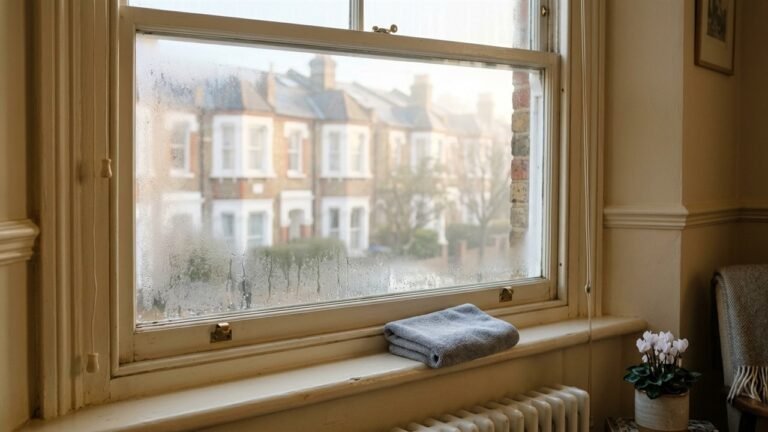
The UK housing stock is the oldest and most poorly insulated in Western Europe. Victorian solid-brick walls, uninsulated cavity masonry, and unheated basements create cold structural surfaces (“thermal bridges”). When everyday domestic moisture—produced by breathing, cooking, showering, and indoor laundry—hits these freezing walls, the air drops below its dew point, instantly liquifying into liquid water.
| Domestic Daily Activity | Moisture Released Into Air | NHS-Recommended Mitigation |
|---|---|---|
| Sleeping (2 Adults overnight) | 1.0 to 1.5 Litres | Keep bedroom door shut; leave trickle vents open or ventilate 10 mins each morning. |
| Drying Wet Laundry Indoors | 2.5 to 3.0 Litres per wash | Never dry on radiators; isolate in small room with dehumidifier (see indoor laundry rules). |
| Showering / Bathing (10 mins) | 1.2 to 2.0 Litres | Keep bathroom door firmly closed; run mechanical extractor fan for 20 mins post-shower. |
| Cooking with Uncovered Pans | 1.5 to 3.0 Litres per day | Fit tight lids on all boiling saucepans; run kitchen cooker hood on external extraction. |
| Total Daily Moisture (Family of 4) | 10 to 14 Litres | Must be actively removed via continuous ventilation or mechanical dehumidification. |

Awaab’s Law & UK Tenant Rights: Legal Protections Against Landlord Inaction
The tragic death of two-year-old Awaab Ishak in Rochdale from severe respiratory arrest caused by chronic social housing damp prompted fundamental reform of English housing legislation. Under Awaab’s Law (enshrined into the Social Housing Regulation Act and expanding to the private rented sector):
- Strict Statutory Timeframes: Social and private landlords must investigate reported damp and mould hazards within 14 calendar days of notification.
- Written Summary Requirement: The landlord must provide the tenant with an official written report detailing the findings, root cause, and intended remedial action within 48 hours of inspection.
- Mandatory Emergency Repairs: Remedial works to eliminate severe health hazards must commence within 7 calendar days.
- Rehousing Duties: If a property cannot be made safe within statutory limits, the landlord must rehouse the affected family in safe alternative accommodation at the landlord’s sole expense.
- No “Lifestyle” Defenses: Landlords and letting agents can no longer dismiss structural damp or lack of adequate heating as mere “tenant lifestyle issues”. For full legal escalation procedures, read our guide on UK tenant vs landlord repair responsibilities.
The 5-Step NHS & Building Science Protocol to Prevent Winter Damp
1. Maintain Steady 18°C–21°C Background Heating
Cold air cannot hold moisture. When a room drops to 14°C, its moisture-holding capacity drops by nearly half, forcing humidity to condense onto outside-facing walls. The UK Health Security Agency recommends maintaining a minimum indoor temperature of 18°C in bedrooms and 21°C in living areas occupied by children or elderly individuals. Rather than turning heating completely off and on in dramatic spikes, keep a low, steady background temperature overnight to keep external masonry warm.
2. Deploy “Shock Ventilation” (Stoßlüften) Without Heat Loss
Many UK residents seal their windows tight to save energy, trapping damp air inside. Others leave windows cracked open all day, cooling down the walls and making condensation worse. The optimal method—pioneered in German building science as Stoßlüften (shock ventilation)—is to open opposing windows wide for 8 to 10 minutes twice daily.
Because structural walls, furniture, and ceilings retain thermal mass, 10 minutes of fast air exchange replaces saturated indoor air with crisp, dry winter outdoor air without chilling the masonry. Once windows are closed, the fresh dry air reheats within minutes, using significantly less gas than trying to warm damp air.
3. Manage Hidden Damp Behind Furniture
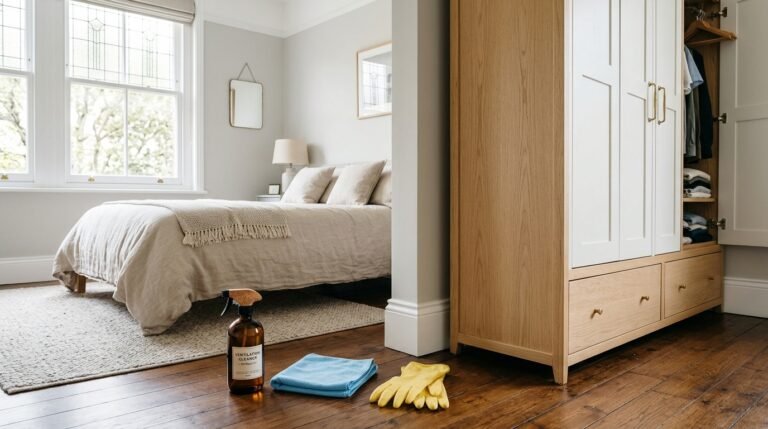
Mould frequently breeds out of sight behind bulky wardrobes, chests of drawers, and headboards pushed flush against cold exterior walls. When furniture blocks airflow, cold pockets drop below the dew point, cultivating dense fungal colonies. Always leave a 75mm (3-inch) air gap between furniture and exterior masonry to permit warm convection currents. If you detect musty odours, follow our guide to clearing mould behind wardrobes.
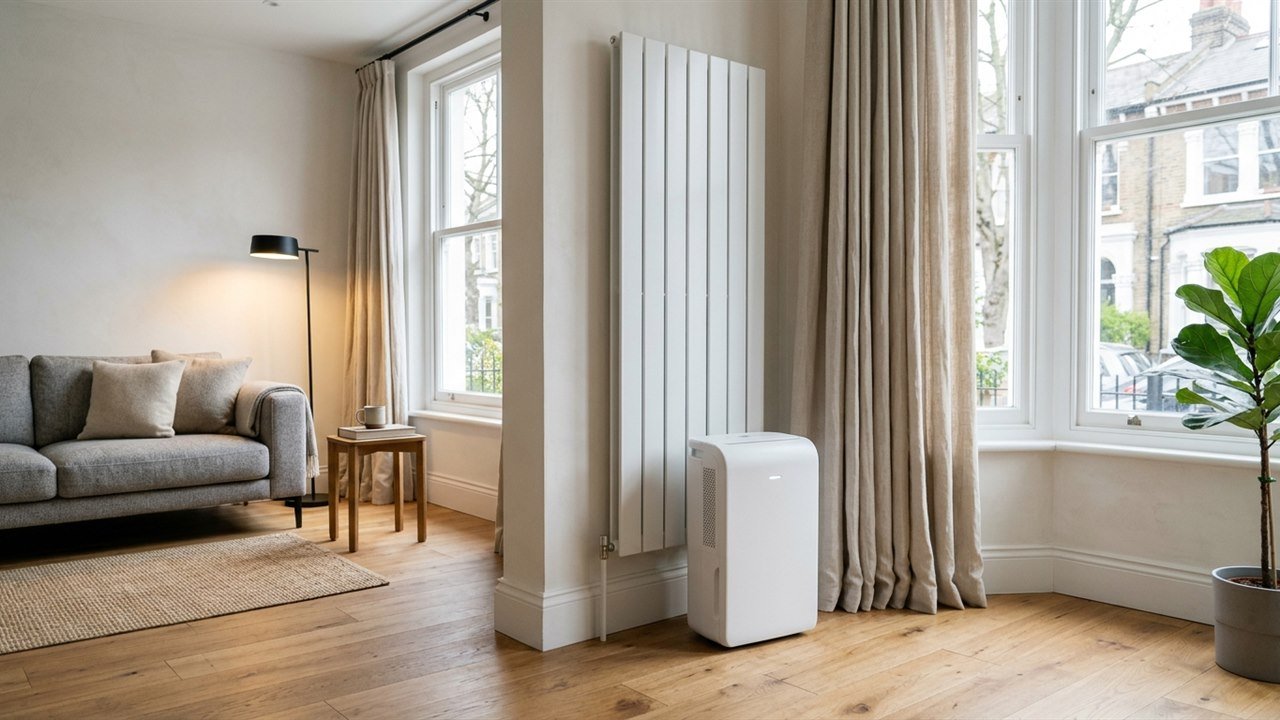
4. Deploy Mechanical Dehumidifiers Strategically
In high-density UK flats where external ventilation is limited, a portable compressor or desiccant dehumidifier is an indispensable health investment. Set the built-in humidistat to 50% Relative Humidity. At 50% RH, ambient air feels comfortably warm, moisture cannot condense on double glazing, and mould spores cannot germinate. For exact electricity consumption calculations, see our breakdown on how much a dehumidifier costs to run per hour in 2026.
5. Safe Chemical Mould Eradication Protocol
If visible mould patches appear on bathroom silicone, window reveals, or bedroom plaster, do not dry-brush the surface—this disperses billions of toxic spores into the bedroom air. Follow this clinical decontamination routine:
- Wear PPE: Put on an FFP2/FFP3 respirator mask and rubber gloves to protect your airways and skin from spore contact.
- Avoid Dry Scrubbing: Dampen the surface first to prevent spore aerosolization.
- Apply Registered Fungicide: Use a Health and Safety Executive (HSE) approved fungicidal wash containing benzalkonium chloride or 70% isopropyl alcohol. Avoid excessive bleach on porous plasterboard; bleach whitens fungal pigments but leaves root hyphae alive in porous gypsum.
- Wipe & Bag: Wipe clean with disposable microfibre cloths and immediately seal the cloths in a plastic rubbish bag for disposal.
- Fix Deteriorated Seals: If mould has penetrated shower or bath silicone, strip the damaged sealant and replace it with anti-fungal sanitary silicone (see our silicone replacement tutorial).
Editorial Verdict from Harry Bennett
Living in a damp UK home is a medical risk that no tenant or homeowner should tolerate this winter. By understanding the link between cold external walls, daily moisture generation, and NHS respiratory thresholds, you can take practical, cost-effective measures to safeguard your family’s health. Maintain your heating above 18°C, ventilate strategically, manage indoor laundry, and hold housing providers legally accountable under Awaab’s Law if structural damp persists.
About Harry Bennett
Harry is the editorial lead at London Homecare, researching practical home maintenance, damp prevention, laundry care, and energy-saving solutions tailored to UK flats, terraced houses, and British weather conditions.